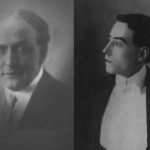
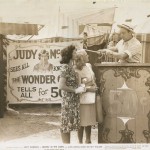
Carnival Architect • Scene Painter • Builder of the First Traveling Midway
Otto Schmidt Biography
Otto Schmidt began as a scene painter at Chicago’s People’s Theater, but his vision extended beyond painted backdrops. He also worked on the building of the Chicago World’s Fair before its opening in 1893 and spoke with actors, show people like Buffalo Bill, and people from all over the world, like Frank Bostock, and learned firsthand what was involved in building a midway – the Midway Plaisance, just like the one at the Columbian Exposition – Chicago World’s Fair. With financial support from Joe Balies, he organized the Chicago Midway Plaisance Amusement Company in 1893, Otto Schmidt became the builder of the first traveling midway. His company traveled to Toledo, St. Louis, Texas, and New Orleans in its first season. Transported on a special train carrying more than 500 people, Schmidt’s show revolutionized the idea of a traveling amusement enterprise.
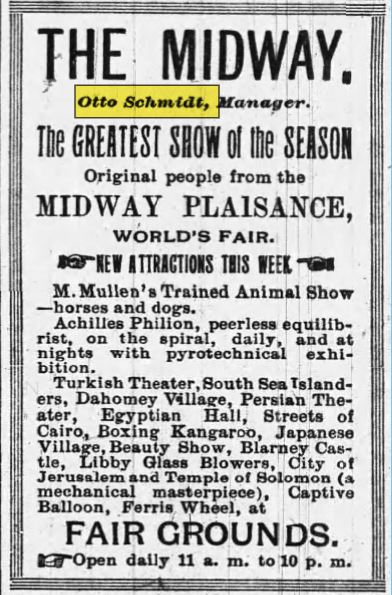
Though his artistic style was still developing, Schmidt painted banners, facades, and scenery to create exotic wonder. By 1896, he was booking state fairs, including Syracuse, and bringing urban spectacle to rural America. His setbacks in New Orleans, which included a contract that was not honored and going broke, highlighted the risks of the trade, but his pioneering role cemented his legacy as the first architect of the traveling midway. He was a carnival trailblazer for what came next with traveling carnivals. Otto Schmidt, builder of the first traveling midway!

Otto Schmidt stands at the threshold of American carnival history — a figure who worked before the word carnival even existed. Jean Azize DeKreko remembered him vividly: a German-born painter turned showman who built entire midways out of tarpaulins, carpenters, and imagination.
In 1894, Jean met Schmidt in St. Louis, where Schmidt organized the Arab troupe into Akron’s Algerian Village. Jean described walking past Schmidt’s attractions — the Dahomeyan Village, the Irish Village, the Persian Village, the German Village with its orchestra, “Mama’s Illusion Show,” and the Streets of Cairo, complete with camels. It was a living mosaic of cultures, performers, and illusions.
Schmidt’s operation was unlike anything that came after:
- No railroad cars – loaded everything on flatcars where things constantly blew off
- No permanent fronts – had to build a new front each time
- Few tents — tarpaulins served as roofs
- Everything was built on-site by painters, carpenters, and canvasmen
- Two sets of tarpaulins rotated from town to town
Jean called it a carnival company even though the term had not yet been invented.
Schmidt’s staff included Howard Jones, Charles M. McDonald, Harry Hamilton, Harry Potter, Taylor Austin, Bob Cato — and Charles DeKreko, proving the DeKreko brothers learned the craft directly under him.
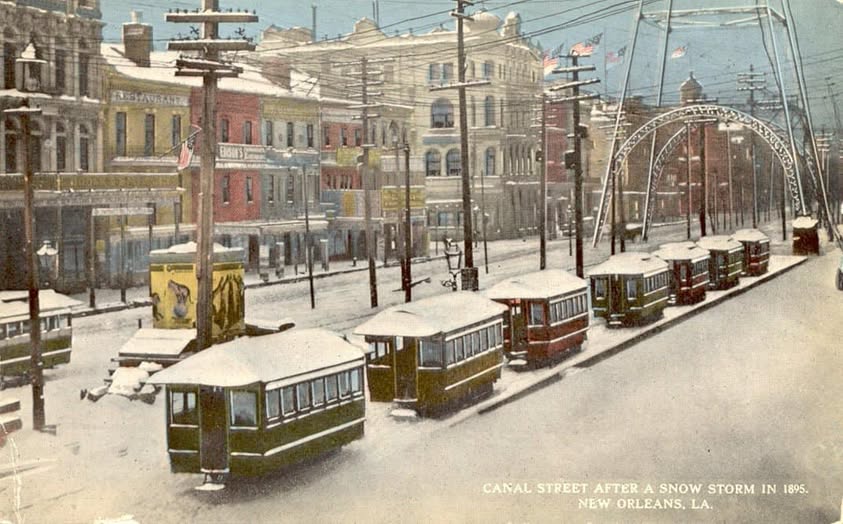
His aggregation traveled from St. Louis to Mobile, Montgomery, Macon, and New Orleans. In 1895, after a difficult season and an arrest in New Orleans, Schmidt disappeared, leaving his troupe stranded. From that collapse, Gabriel and Charles DeKreko helped form a new company — the seed of what would become the DeKreko Brothers Shows.
Otto Schmidt never built a railroad carnival. He built something more fragile — and more foundational. Otto Schmidt builder of the first traveling midway
He built the first midway from tarpaulins and memory, and the carnival followed.
Here’s what Howard Jones, part of the staff of the Chicago Midway Plainsance Amusement Company and talker at the Chicago World’s Fair in 1893, remembered about Otto Schmidt in an article he wrote in the Billboard June 13th, 1925. The Summer Special, Page 1
“The idea of the carnival originated from Otto Schmidt, who was a scene painter and stage manager at the People’s Theatre in Chicago.
“About July 1893, Joe Bailey’s, owner of the People’s Theater having sold his lease to the theater to Colonel Hopkins, the originator of the 10 cent, 20 cent, 30 cent idea and theater prices, was talked into this by Mr. Otto Schmidt. His idea was to take the important attractions of the Midway at the World’s Fair in Chicago out to the general public all over the United States. And that way they could play fairs that were already active. The fairs, the state fairs, were not as they were now. The state fairs were events where they had Car Races and Grandstand features, so this idea to actually take the attractions to the two state fairs that were at the Midway Plaisance at the Chicago World’s Fair was a very new idea. The winter of 1893 and 1894, Otter Schmidt organized his first company and tried it out in Toledo, OH. He made the jump there to St. Louis, MO, then to New Orleans, LA, where a disastrous season was closed.
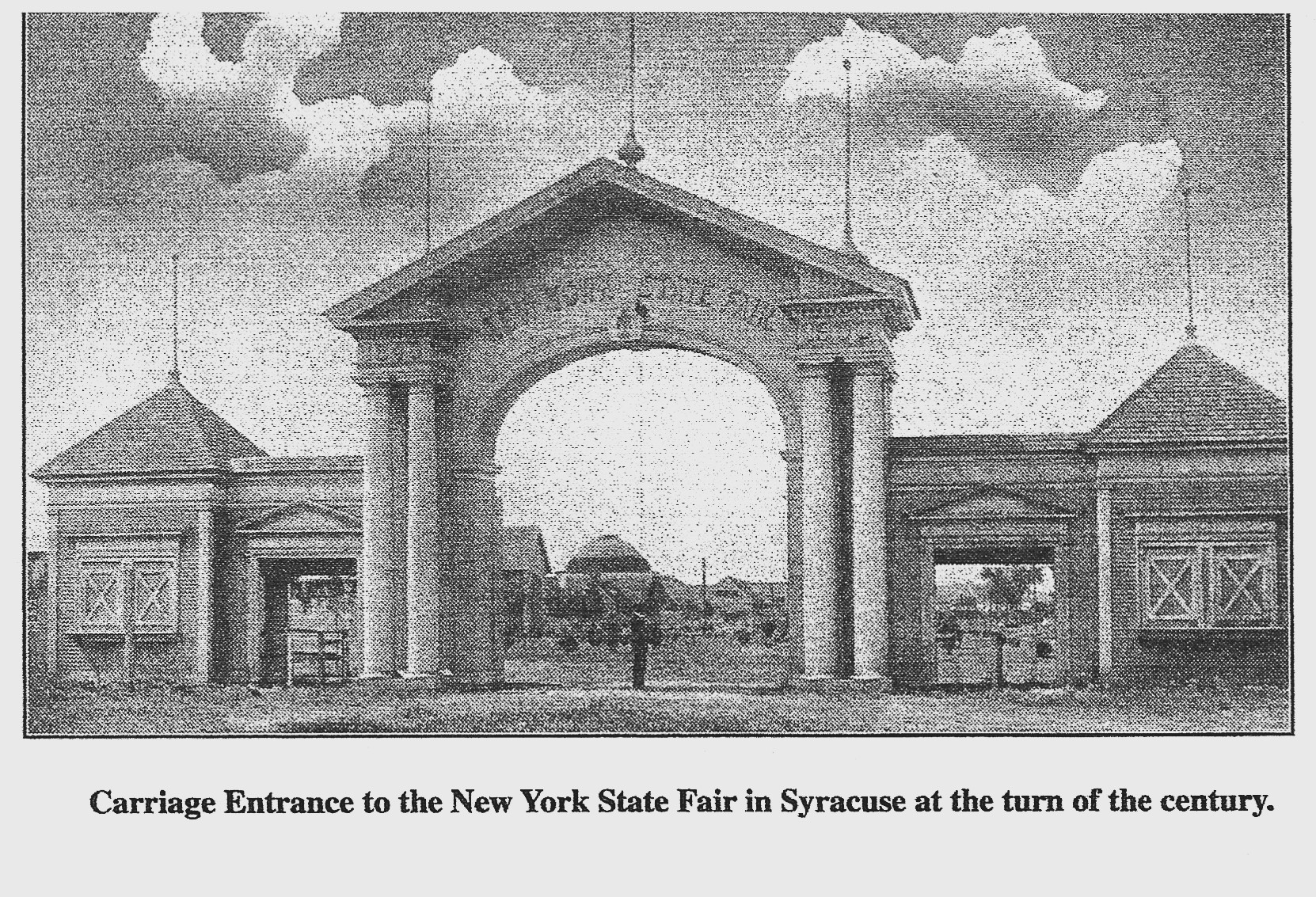
The show was reorganized in Chicago in 1895 on a larger scale. Joe Bailey’s advancing $35,000.To improve upon the original. Season of 1893. The first stand was the New York State Fair at Syracuse on a special train there were loaded flat cars 6 box cars, and 540 people went to Syracuse on a special train from Chicago. Among the attractions, its Oriental towers 60 feet high, the reproduction of The Blarney Castle, and all other shows with panel scenery fronts presented a more attractive appearance than many of the present day carnivals which were mostly having state fairs.
It was necessary under the construction of this carnival company to build frames for the different shows and almost two complete sets of scenery, sending their carpenters ahead to the next stand to get things ready for the show. Even at that, a week was lost between each stand. A stand is now called a spot.
Now, in regard to the carnival ideas being different from the present-day shows, the organizations now on the road carry from one to a dozen or more riding devices. One of the contributors to the special article on the subject is this year’s spring edition of the Billboard, seemed to think that because we covered over the Persian Theatre, a part of the Streets of Cairo, the illusion shows, Blarney Castle, and Oriental shows with what he called Tarpaulin tops. They were not classified with later carnival period. However, we had a few shows under tents already, namely Tony White Circus, Frank Bostock’s, Helen Conger, The old Plantation, Persian Theatre, Lee’s Big Snakes, Bosco and World, all with Banners and Bally platforms the same in appearance at the present day Gilly shows carry to recognize that most of the attractions that were on the midways in the late 1800s all had to be built. They were not on a mounted trailer or something that could just be unfolded and run up and down the highways. Trains were the mode of transportation to get people to and from. To build these whole carnivals at one location with wood, saw, paint workers, a lot went into it. It’s important to note that the Streets of Cairo attraction carried passengers around what could be considered a ride
Otto returned to Chicago, Illinois and worked once again at The Peoples Theatre under the new management. The research continues.
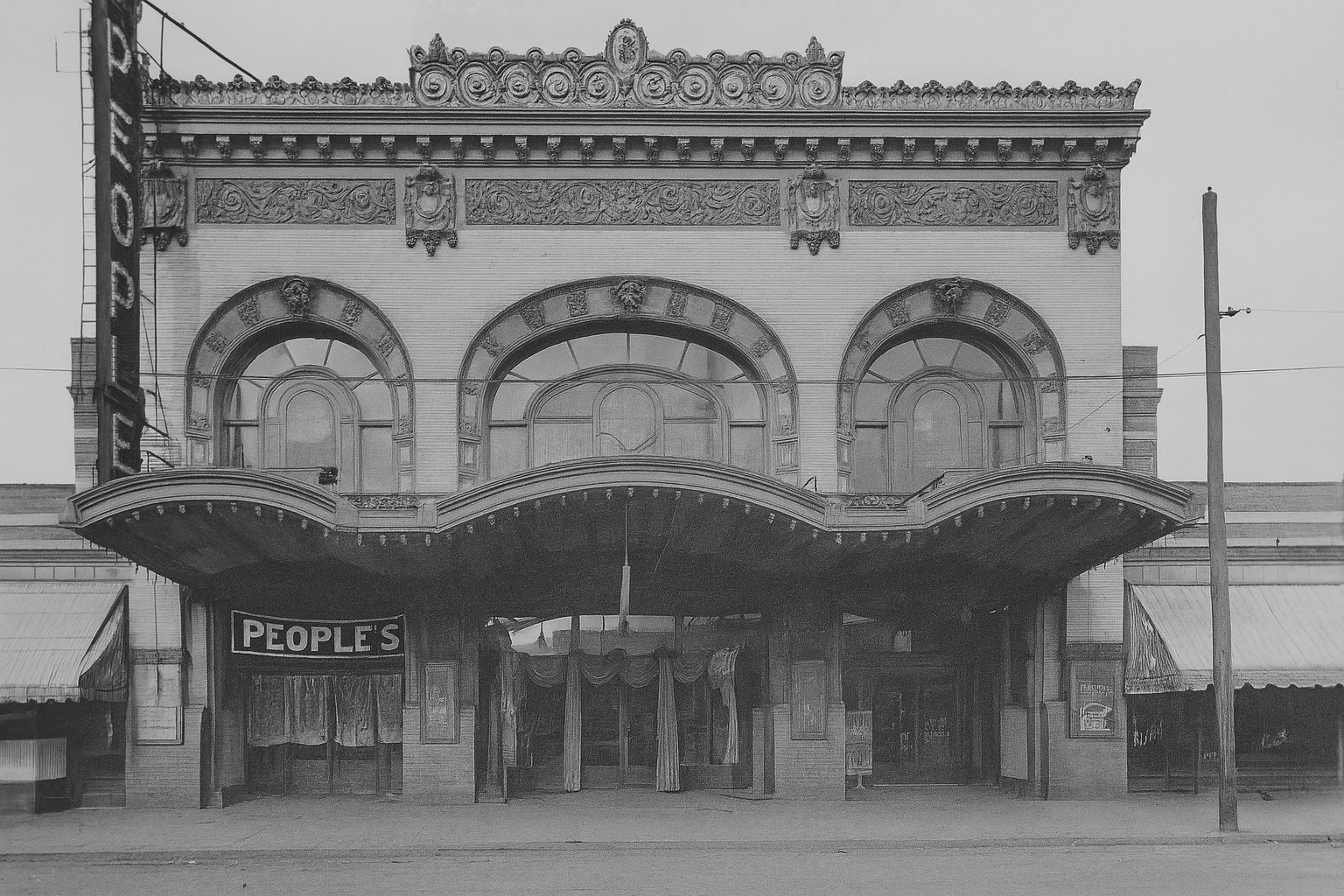
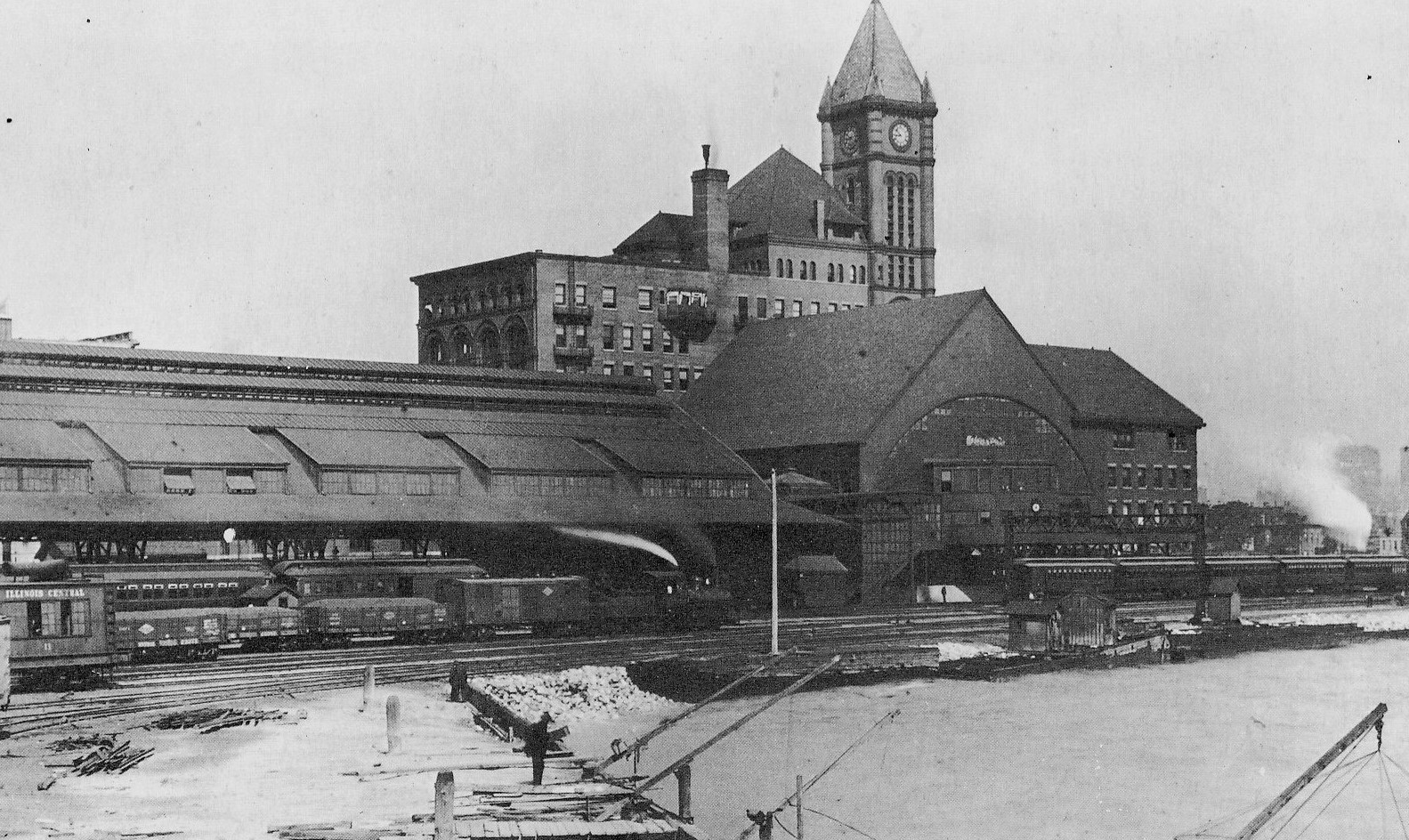
The People’s Theatre, Chicago, April 1893 — where Otto Schmidt first dreamed the traveling carnival into being. In 1893, this stage became the launchpad for a new American tradition. Scene painter, stage manager, visionary — Schmidt’s brush and voice helped shape the Midway’s future.