Circus and Carnival Wagons Built by Beggs Company
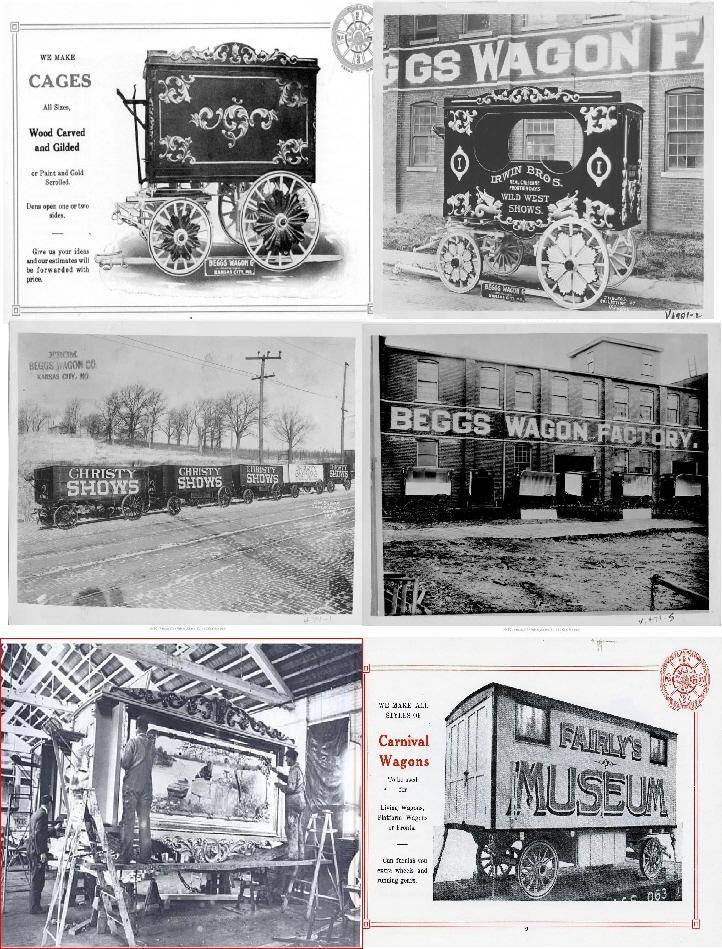
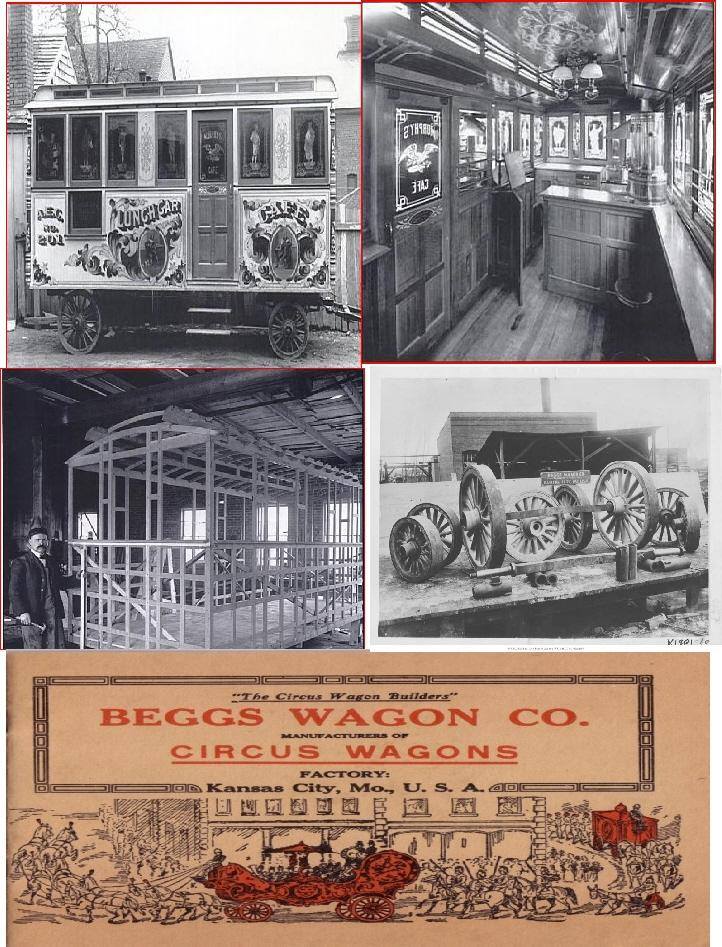
By the end of the 1800’s, wagon builders abounded. Many of these companies specialized in particular wagon designs such as stage coaches, surreys, farm wagons, and even dining car wagons. It was back in the late 1880’s when the Beggs Wagon Company, then at Creston, Iowa, commenced making show wagons. Their line had been Farm and Freight Wagons since 1875.
The F. J. Taylor Circus wintered in Creston with a large circus and menagerie (an Overland Show). Needing new, heavier wagons, they inquired if Beggs could design and build them. A complete outfit of wagons, including baggage, cage, and advance wagons were contracted and subsequently built for the show. For many years following, wagons were built for large and small circuses and carnivals of about every description by the Beggs company.
Show wagons called for a particular type of construction, and therefore, there were never many manufacturers in the country that built them.
Many details of construction, unknown to the layman but appreciated by the showman, were a “must standard” on show and circus wagons. The wagon tongues had to be wide and strong. Some were 12″ to 14″ wide at their backs and several inches thick to stand the strain of being pulled out of the thick, gooey mud they would encounter on some lots. The removal of a single hitch pin allowed the wagon tongues to be removed and placed under the wagons en-route. They had to have thick, strong hold back chains and goose necks at the front to hook on extra lead bars for additional horse teams. If seats were on the top of the wagons, they had to be jump seats, able to be collapsed, and needed the top risers to hinge down to reduce top clearance. Drivers’ foot-boards had to be made to hinge down, falling against the body to reduce space in loading the cars. Possum bellies were built under many to add additional loading space. Large, strong steel rings were placed at the front and rear corners of the wagon bodies for hooking on snatch teams and unloading from flat cars. Cages were made to have barred ventilators properly placed front and rear to allow ventilation when cages were closed up en-route. In addition, cage wagons needed inside rear barred doors, slide up feed doors, slide clean outs, etc. All heavy wagons were equipped with drag shoes that hung underneath their bodies by chains for emergency braking.
The Beggs Wagon Company, by then relocated to Kansas City, Mo., after 1904, was completely equipped to manufacture every item needed in the production of any kind of circus or carnival wagon. A lumber yard of many thousands of feet of seasoned lumber was always on hand. Complete woodworking machinery and a large blacksmith department for the fabrication of all steel and iron parts were maintained. Wheel making machinery included machines for every operation from the driving of spokes, turning of wheels, pressing of boxing, etc., and a large hydraulic press, for shrinking or setting of the metal tires from the light spring wagon size to the largest baggage wagons. Craftsmen and artisans, experienced in wood carving, artistic painting, and decoration, were among the many talented and experienced personnel.
The Beggs wagon business prospered until production of wagons was discontinued about 1923.
The Beggs letterhead slogan always read: “Made a little better than seems necessary”.