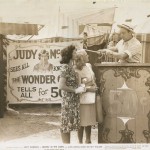
Joe McKennon, showman, circus and carnival historian, author, scholar: The Chronicler of the Canvas
Joe McKennon Written by Doc Rivera January 20, 2020
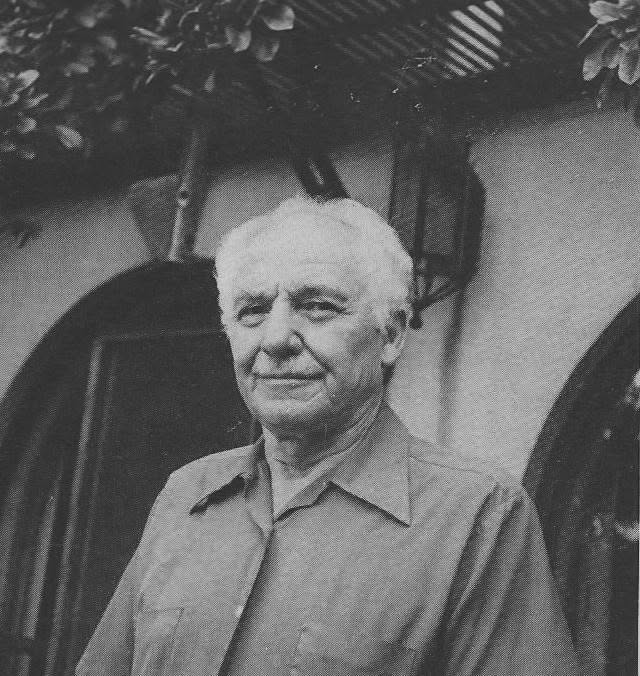
To many of you, the name Joe McKennon is an unfamiliar one. But if you’re a fan (Museum Facebook Page) of this page and carnival history, it shouldn’t be.
I am sometimes recognized as a “carnival historian”, but I humbly admit that there are several of us out here digging through the history of this wonderfully colorful business, and the sum of their individual knowledge in this field is far greater than mine. But if ANYONE deserves to wear the lofty crown of “Carnival Historian”, it is Joe.
Without a doubt, Joe McKennon paid his dues. He, like many of us, lived a long life on the old sawdust trail playing with such legendary names as Hagenbeck-Wallace, Sells-Floto, John Robinson, and the Al G. Barnes circuses. And he made his bones on carnivals too, such as the Beckman & Gerety midway, as well as Morris and Castle, Johnny J. Jones and Goodman Wonder Shows.
He was a self-educated scholar, attending classes in five different universities throughout the country, although he never earned a university degree. He was known as the “go-to guy” when it came to outdoor show business and the history of traveling shows.
Joe started digging out our history decades ago, in the early 1960s. He had the foresight to realize that the old-timers, with the true historical knowledge, were rapidly disappearing. He set out on a quest to amass the wealth of details of this history long before home computers, the internet, and sites like Google or Wikipedia were even thought of.
Interviewing the old-timers on their own turf and authenticating the accuracy of what he’d read and heard. Many, especially the generation then coming up in the business, refused to even talk to him, mistakenly believing that he was just another hack writer doing a “tell-all” exposé on an industry that was already suffering from the stigma of a badly tarnished image. Some of the younger showmen dismissed him as just another old cookhouse coot telling tired jackpots of the road. They wouldn’t give him the time of day.
But many did, especially those who still remembered what it had all been like at the beginning and ached to tell their stories before they went on to that big ‘railer’ in the sky. And he listened to all of them, taking notes and remembering it all for posterity. As he traveled around the country talking to hundreds of show people, he unearthed many untold stories, historical facts, and a treasure trove of old photographs and papers that might well have been simply thrown away by the following generation as unidentifiable trash. He spent years tirelessly unearthing much of the history we now simply take for granted, and he did it all on his own dime.
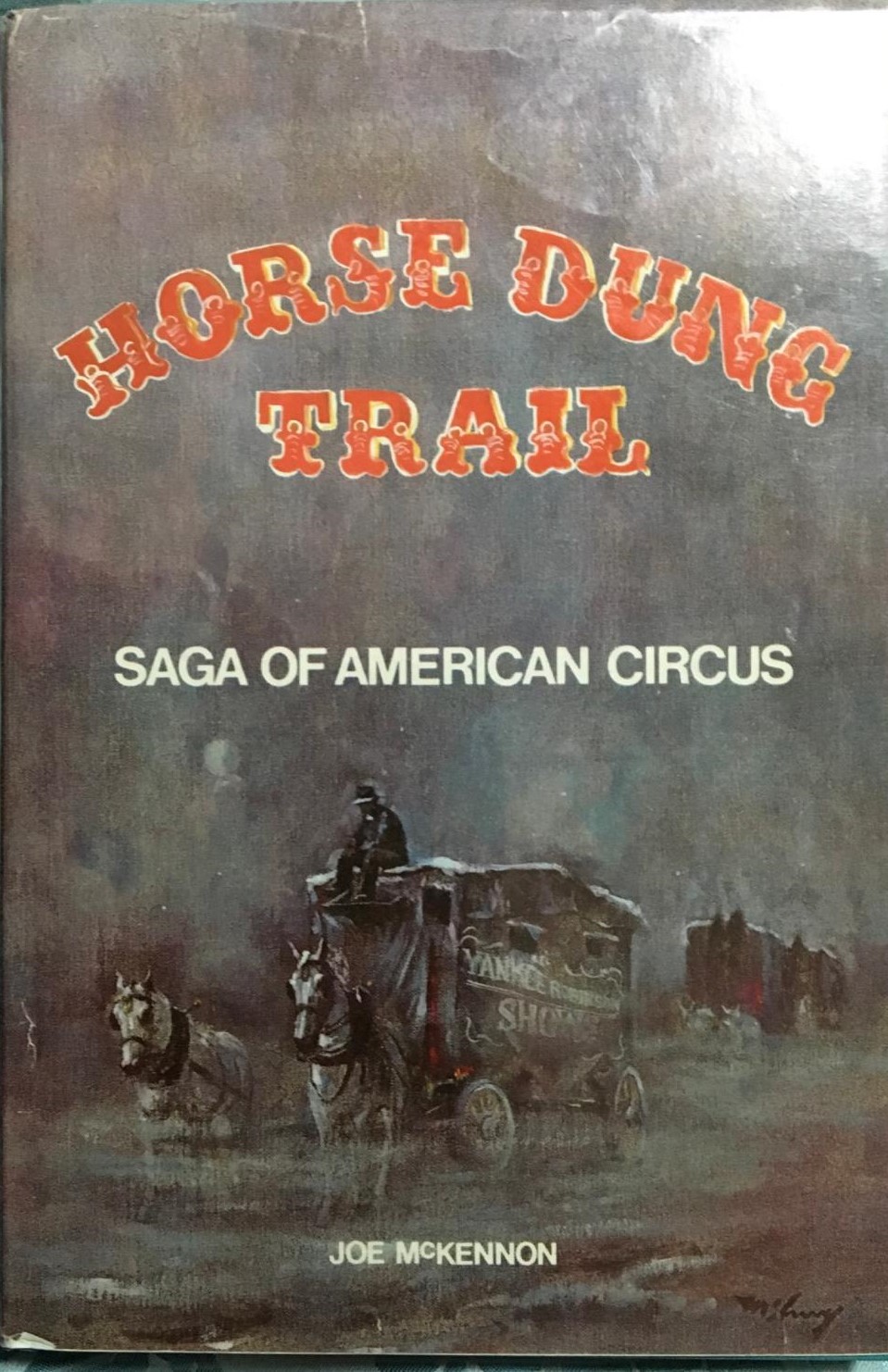
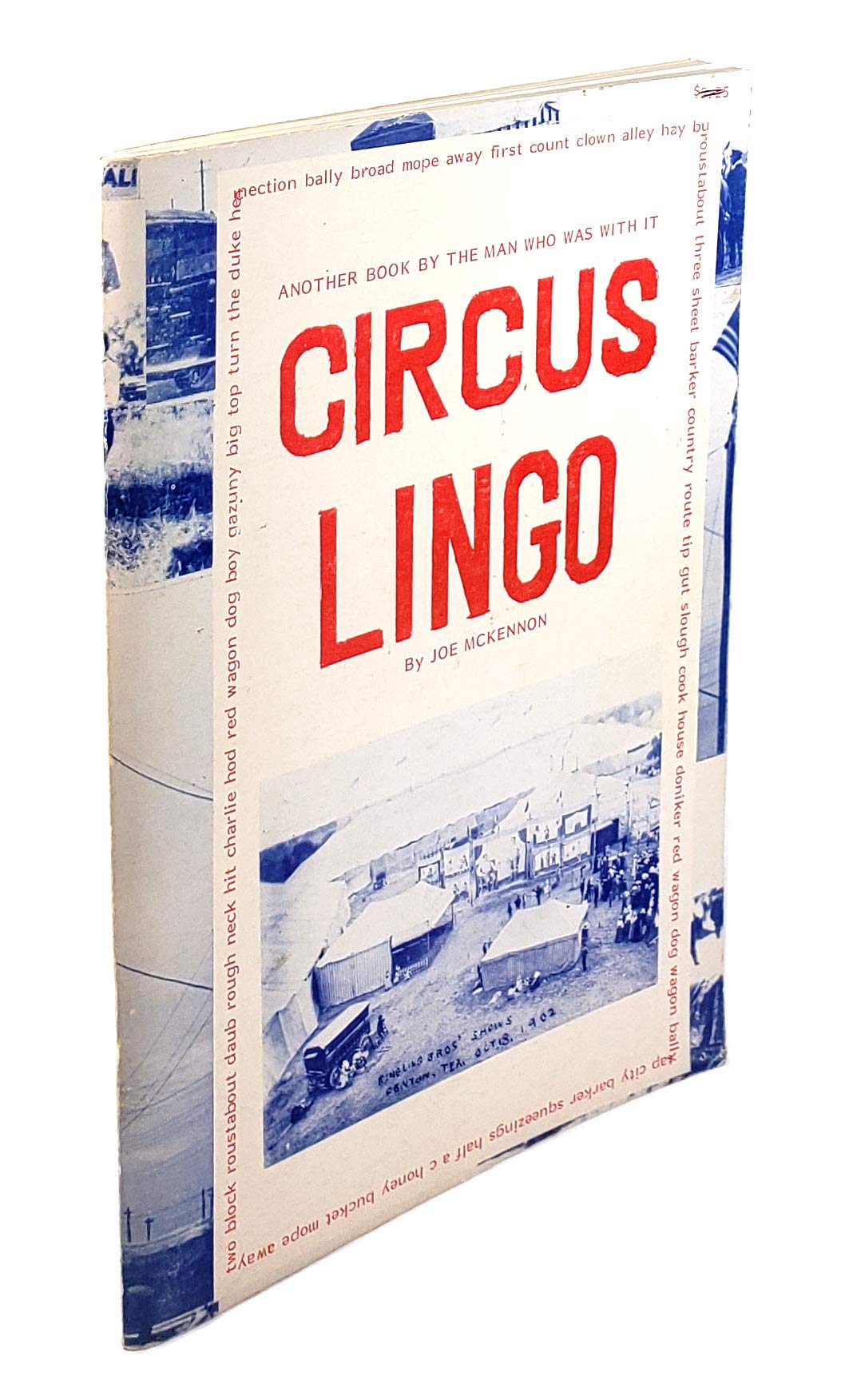
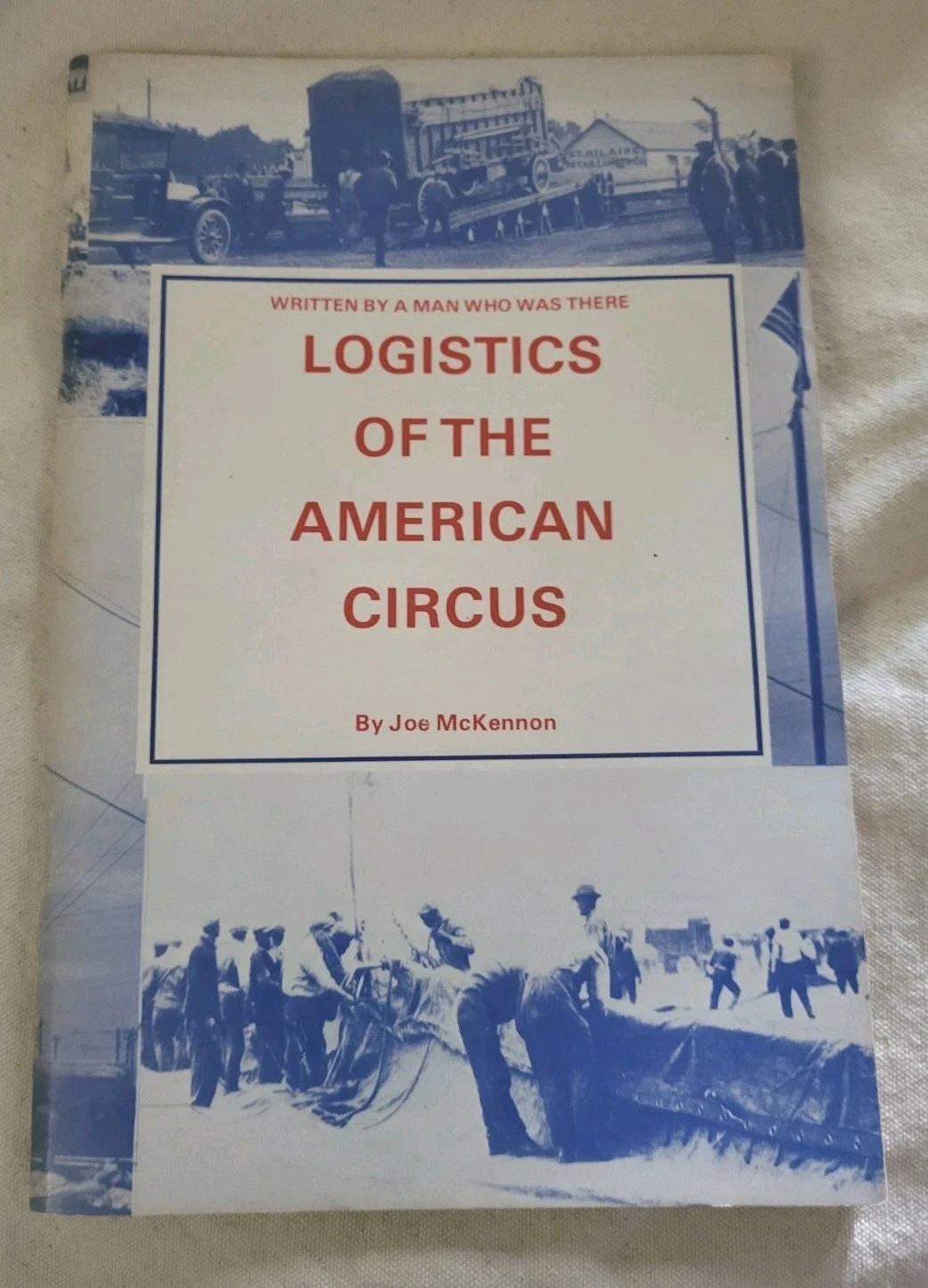
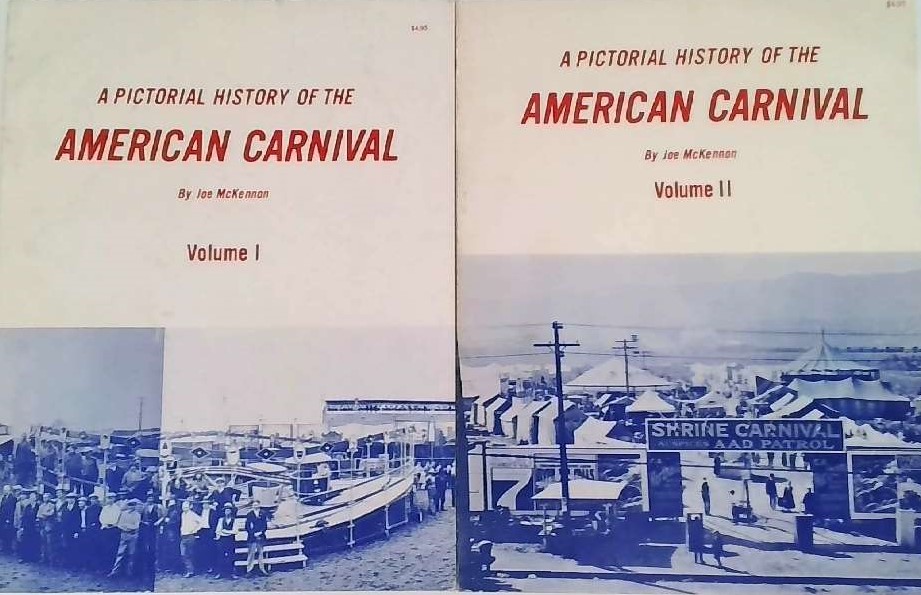
He was a self-published author with his most notable book “A Pictorial History of The American Carnival Vol.1 and Vol. II” and although it was published in 1971, almost 50 years ago, it is still recognized today as the most comprehensive and complete written work on the history of the American carnival in existence. ( He wrote volumes two and three sometime later, but they were more or less a chronology detailing the biographies of later era showmen.) He, along with his wife Marian, wrote books of fact and fiction that never really sold well or brought the academic success he’d hoped for, and because of the limited publishing numbers and the fact that they’re long out of print, are now hard to find, though A Pictorial History—- comes up on eBay and Amazon occasionally.
One such book was “The Rape of an Estate”, then due to be published in 1986. It was about his experience as the Museum Curator of the famous Ringling Museum over a fifteen-year span and about bringing the now famous museums (art, Ca d’zan-home & circus) and their lavish grounds and gardens in Sarasota into their present glory.
In it, he details his frustration in dealing with the frequently changing Board of Directors throughout the years of his association with the museum while designing exhibits and desperately trying to preserve the legitimate historical accuracy of the Circus Museum itself despite the arrogance of the lofty, college-educated board having no experience and little real interest in the actual circus world. He thought that the art museum and Ringling Mansion should be made available to the common person, not just a few rich donors, ambitious politicians, and high-hats, and worked to that end despite his lofty and powerful detractors. In the end, he grew weary of the battle and resigned in frustration.
Although a limited number of volumes were printed, the book was subsequently unpublished for the author’s personal reasons and few copies remain. We’re lucky enough to have a copy at the Showmen’s Museum’s library. The book, although admittedly somewhat biased, is a fascinating and very revealing look into the little-known facts about the past financial and very private, secret inner workings of the now-famous attraction.
But most of all, he loved the history of our business passionately and wanted to preserve it for now obvious reasons. He was the first major donor to step up when our Gibtown Showmen’s Museum was being conceived with a $50,000 donation in the form of Dow Chemical stock. (I wish we’d have hung on to it for a while.)
He was irascible, outspoken, and opinionated. He never shied away from an argument, and he was seldom wrong in his knowledge of show business historical facts. He could be a crusty old curmudgeon, but he was respected by all who knew him, and his reputation always preceded him wherever he went.
I never really got to know Joe as well as I would have liked to. Like so many of the legendary showbiz people I had the chance to talk with during my lifetime, I was too busy doing other “more important things” on the day. Now they’re all gone. It’s one of my great regrets.
Joe never lived to see our modern Showmen’s Museum as it stands today. I wish he had… for so many reasons. And I hope that I have built something he would have been proud of in my efforts. A clean, decent, pleasant museum dedicated to the preservation of the accurate history of outdoor show business… for EVERYONE… just like he would have wanted. (David “Doc” Rivera)
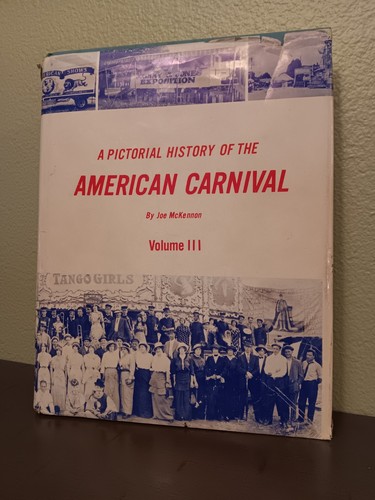
Joe McKennon was the preeminent author, Circus and Carnival historian, and showman who systematically saved early American carnival and circus history from obscurity. Unlike mainstream academics who analyzed show business from afar, McKennon lived it. Leaving his native Texas as a teenager, he dove headfirst into the nomadic world of outdoor entertainment during the 1920s and 1930s—working his way through medicine shows, tented circuses, and early truck and rail midways. He witnessed firsthand the brutal transitions, the legal crackdowns, and the mechanical evolution of traveling amusement setups.
Upon retiring to Sarasota, Florida—the historic winter capital of the American circus—McKennon recognized that the ground-floor memories of the industry’s founders were rapidly fading. He launched a relentless, decade-long preservation effort, visiting midways, interviewing showmen, and combing through surviving route sheets, physical business logs, and long-lost print columns of The Billboard, one by one.
In 1971, he self-published his masterpiece, A Pictorial History of the American Carnival (Volumes I & II). Packed with hundreds of rare photographs, rosters, and operational logs, his text remains the foundational authority preserving the legacies of early Midway architects. McKennon spent his final years surrounded by show history, continuing to write definitive trade references until his passing in 2001. Copyright 1972 by Joe McKennon, Library of Congress Catalog Card Number: 72-85200, Printed in The United States of America
Thoughts by Debbie Rivera
While I was undergoing Cancer Treatment, I started this project to remember all the shows and showmen that came before. I worked in unison with my husband, David “Doc” Rivera, and it was a great distraction and a new direction for me. I used Joe McKennon’s “A Pictoral History of The American Carnival” constantly and in my own research on the American Carnival, still do so to this day. I tried to interview the show people as well, to capture their vast knowledge and record it before it was too late. I happened to read Joe’s letter about being turned down by so many, but to keep going and continue the work of gathering the history. This page and this website are dedicated to Joe McKennon, David “Doc” Rivera, and so many more who work tirelessly to capture the history of the American Carnival.
Other Books By Joe McKennon