Railroad Trains Loaded With Colorful Wagons
Once upon a time, a long time ago, when the country was still young, and everything was infinitely possible, mile long railroad trains loaded with colorful wagons full of exotic mysteries traveled through the darkness of night, bringing the only form of entertainment that many in early America would ever experience. Remembering this important part of Americana and the interesting people who spent their lives creating the Amusement Industry is just as colorful as the mile long trains.
Historically:
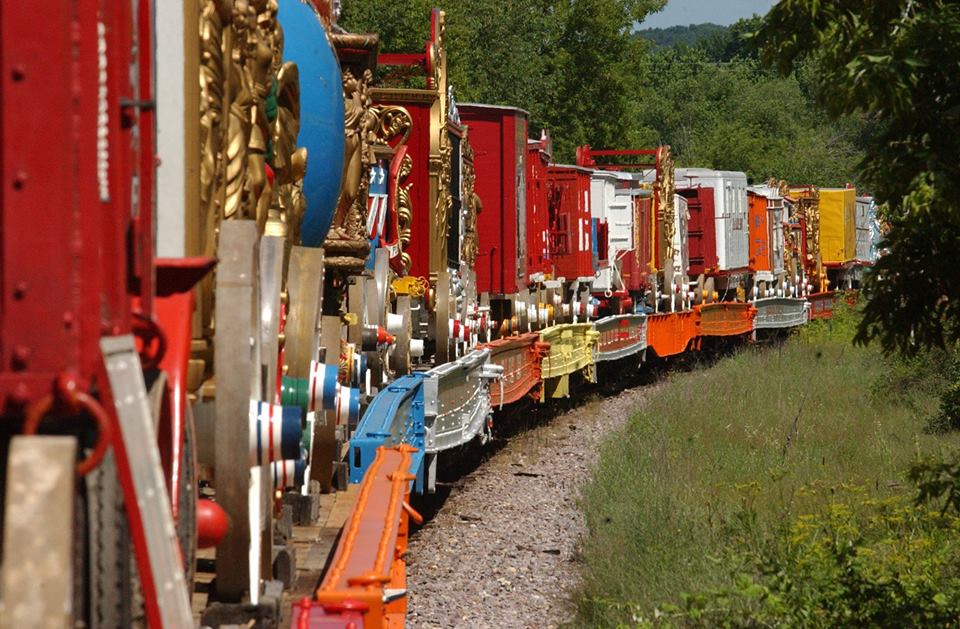
- The Golden Age: In the late 1800s and early 1900s, “railroad shows” were synonymous with the largest carnivals and circuses, such as Ringling Bros. and Barnum & Bailey (below), which operated two mile-long units (Red and Blue) until retiring its trains in 2017.
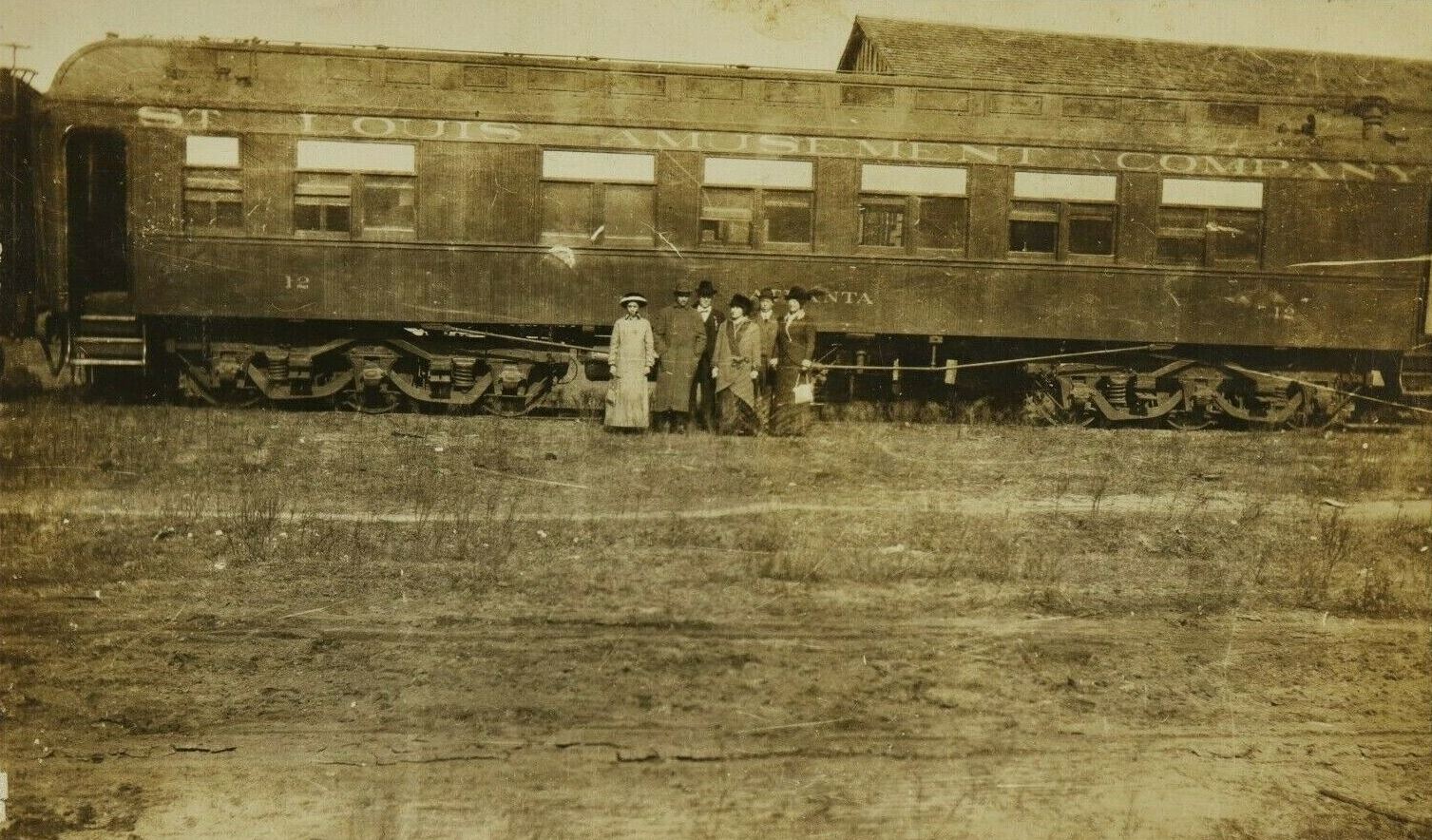
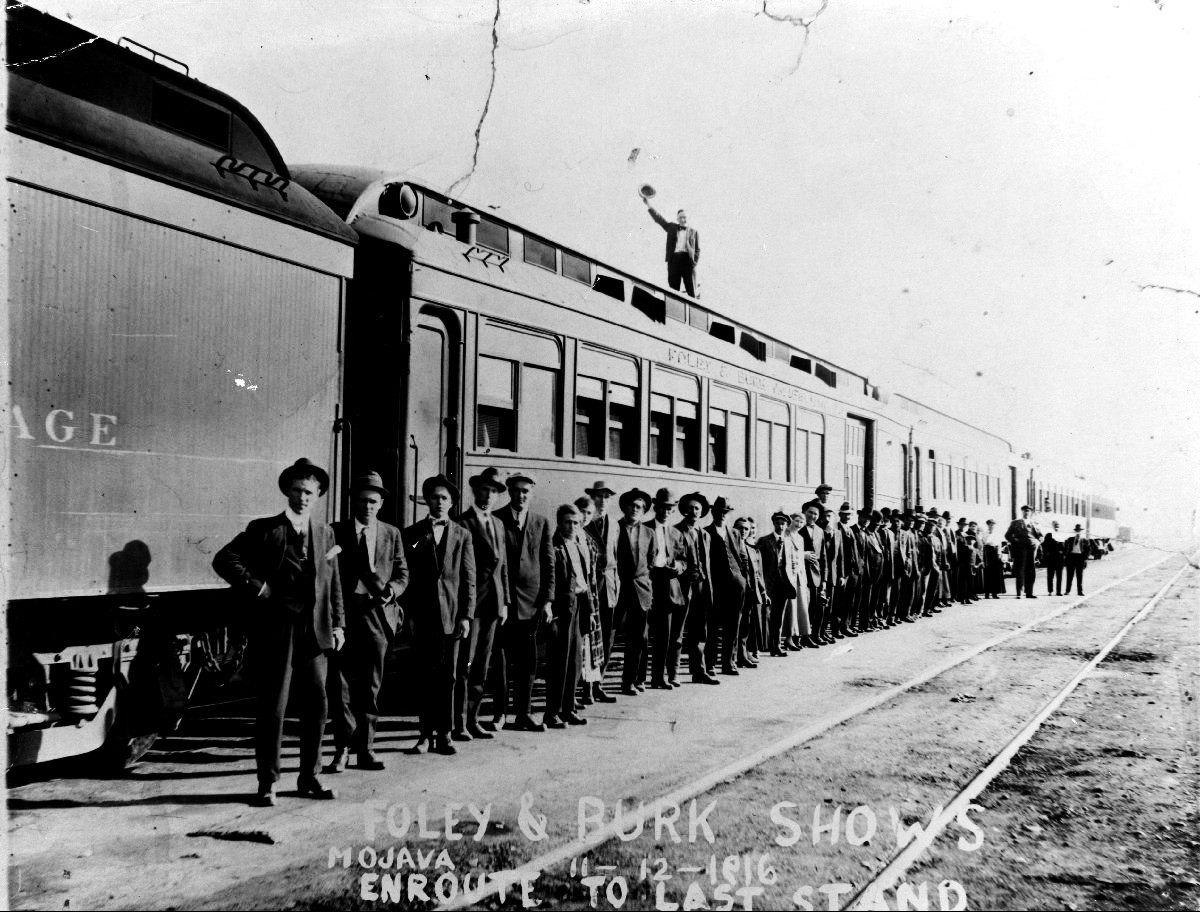
Foley and Burk Shows
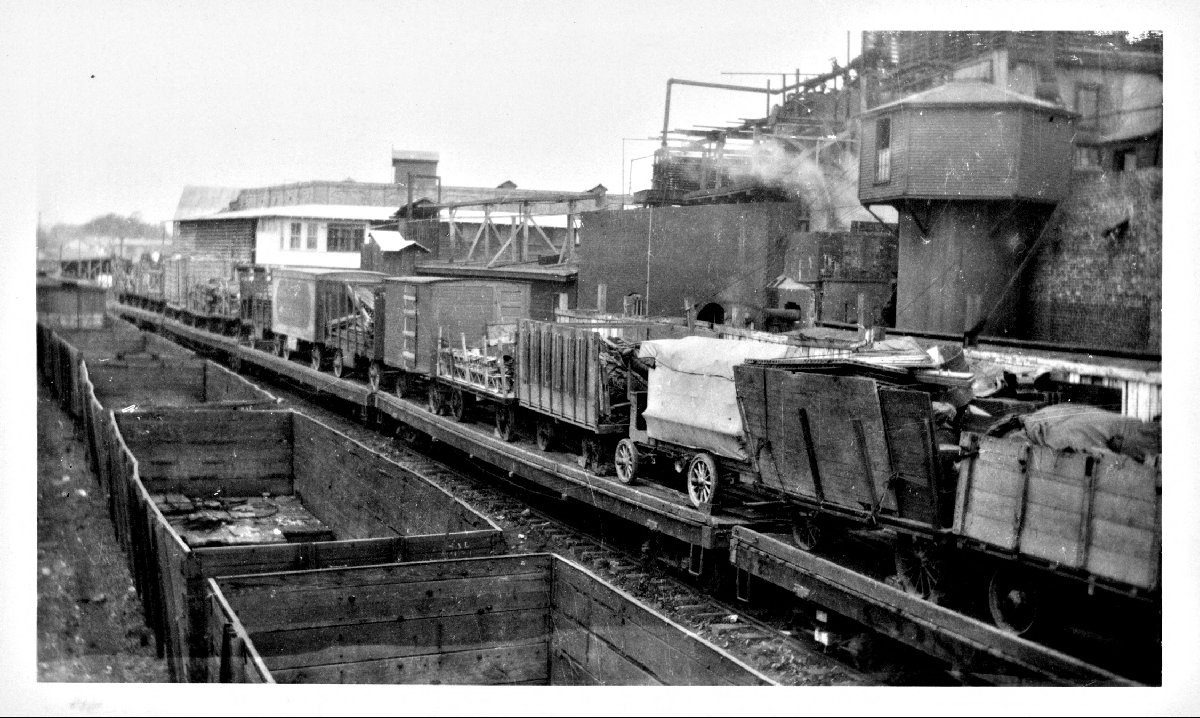
Foley and Burk Shows was a California-based traveling railroad carnival that operated in the early-to-mid 20th century, utilizing dedicated railway cars to transport its circus, tents, and equipment between cities.
Train Composition and Features
- Railway Cars: The show operated its own railroad cars, which were transported on major railway lines, particularly in California.
- Wagon Transport: Railway cars were specially designed or loaded to carry show wagons, with documentation showing horse-drawn vehicles (such as wagons carrying circus equipment) being loaded onto or appearing alongside the rail cars.
- Operational Style: Similar to other major touring shows of the era, the train carried the entire production, including performers, tents, and amusement equipment, from city to city, often announcing its arrival with, for example, live displays before the show opened.
The show was heavily involved in traveling through California.
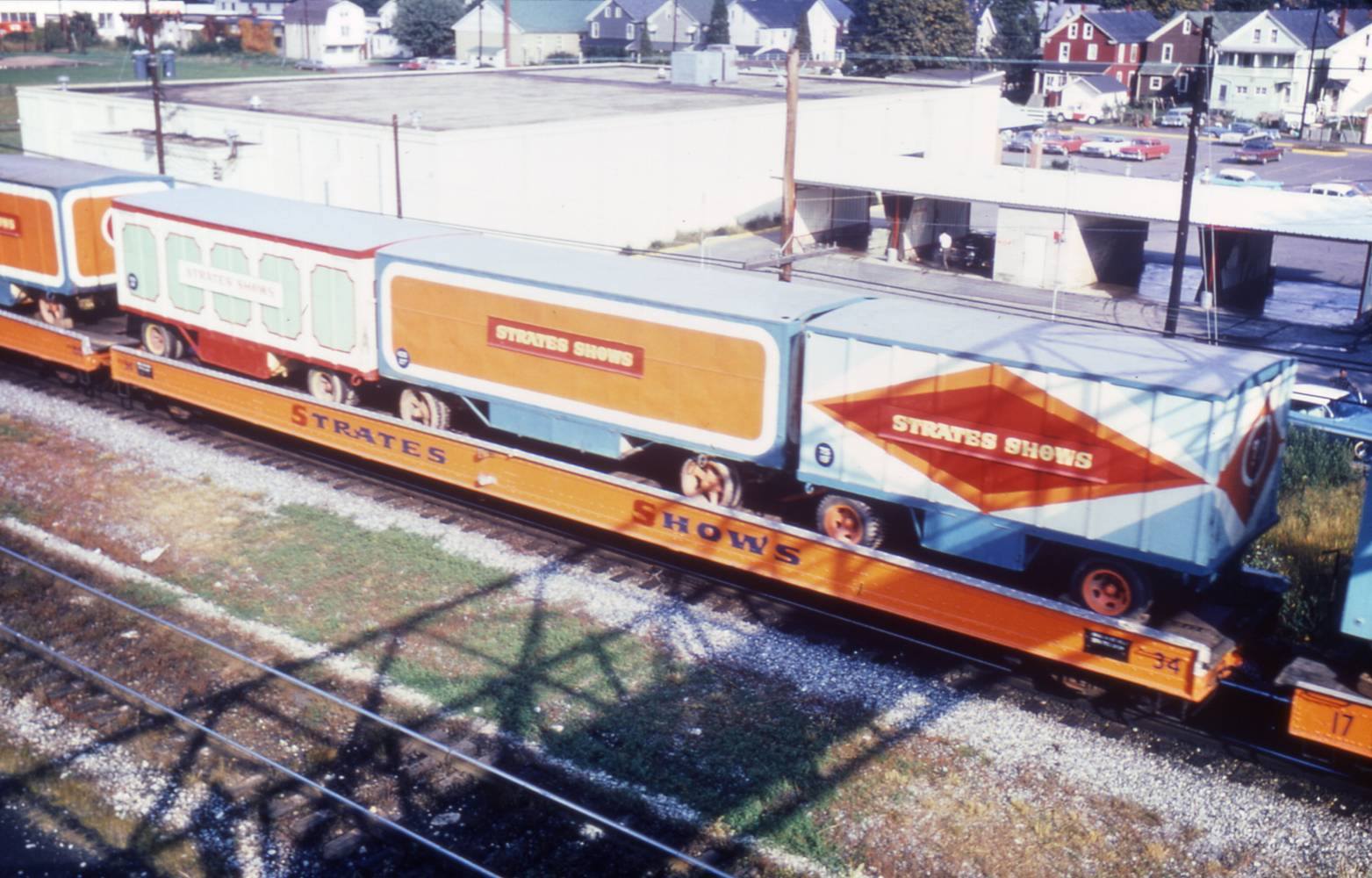
Strates Shows
- Train Composition: At its peak, the Strates train was over a mile long, featuring roughly 61 cars, including 50 flat cars for rides/equipment and 10 sleeping “coaches” for over 100 employees.
- Living on the Rails: For many years, these trains functioned as “rolling cities,” with staff living in compact onboard apartments.
- Loading Efficiency: A specialized trainmaster and crew could load or unload the entire train in under 18 hours using a system of ramps and pulleys.
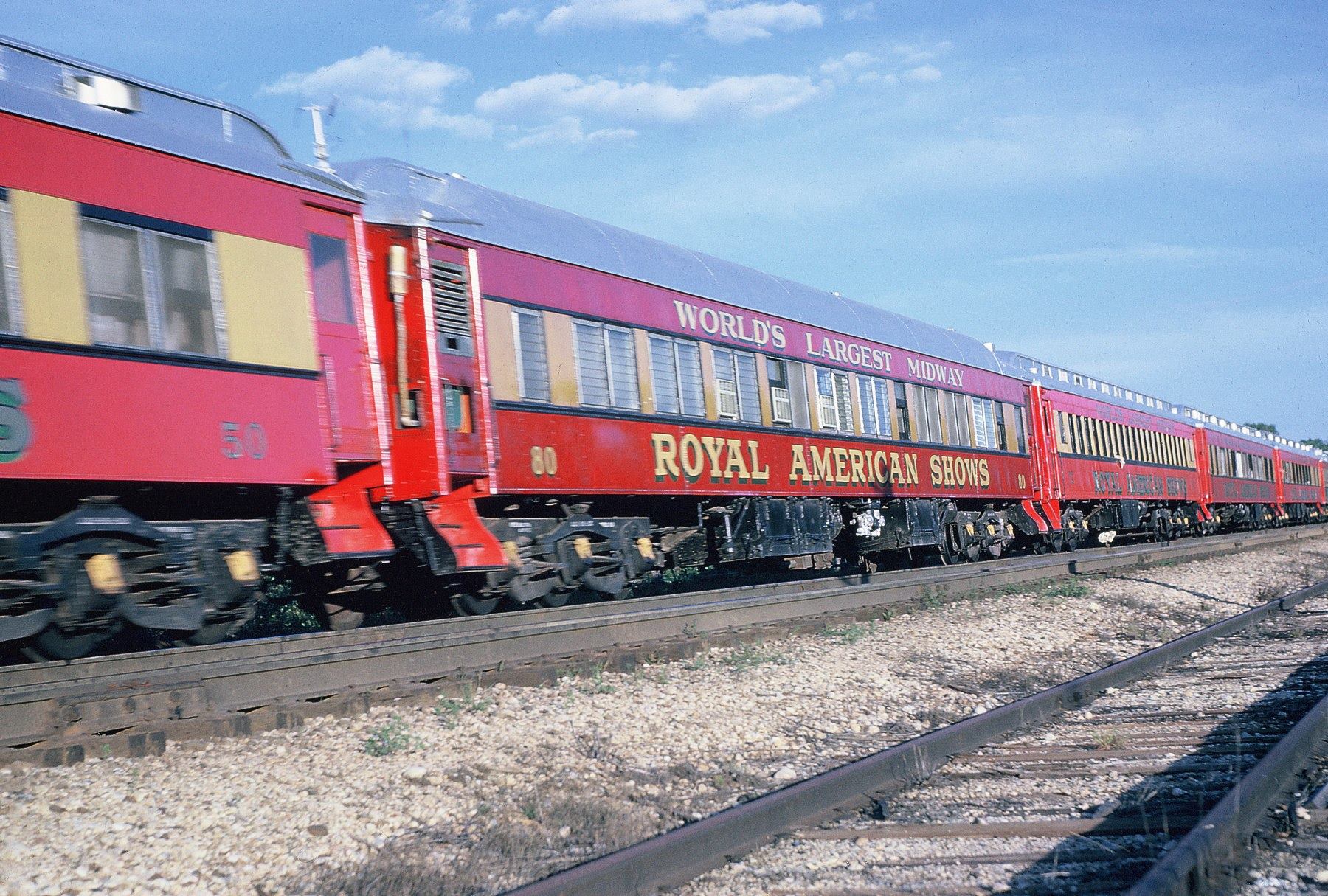
Royal American Shows
Train Composition Breakdown:
- Flat Cars: Roughly 50 flat cars were utilized to transport the show’s rides, wagons, and machinery.
- Sleeping Coaches: The train included about 10-15 sleeping cars (“coaches”) for over 100 employees.
- Specific Cars: Known equipment included 7-compartment, 2 drawing room sleepers like the “Raton” (ex-RAS #76) and cafe parlor cars like the “Powhatan” (ex-RAS Pie Car #56).
- Loading: A specialized crew used a system of ramps and pulleys to load the entire train in under 18 hours.
This massive operation often used multiple engines, such as F-units, to pull the train
Carnival and circus trains were also moving cities.
The trains not only carried all the carnival equipment, staff, and crew, but some of the larger carnivals were complete cities with live aboard sleeping cars, to mail service to Pie Cars. Larger Carnivals also had private cars for the owners and their families.
Key Elements of a Carnival Train “City”:
- Pie Car (Dining/Social): A modified car serving as a diner, social hub, and lounge for employees, often offering 24-hour food, snacks, and socializing.
- Sleeping Cars (Coaches): Converted, often antique passenger coaches (or former hospital cars) divided into private rooms or berths for performers and staff.
- Stock Cars (Animal/Logistics): Used to transport animals and often specialized equipment.
- Flat Cars (Heavy Equipment): Long (89-foot) cars carrying rides, game stalls, and generators.
- Generator Car: Provided electricity for the entire train.
- Work/Maintenance Cars: Specialized cars for repairs to rides and wagons.