Editor • Plaza Manager • Showman • Cultural Architect of the Early Midway
1902 – Will Heck Carnival Midway & Street Fair Attractions
1903 Will S. Heck New Exposition Company
1905 Will S. Heck World’s Fair Pike Show
1906 Heck Amusement Company
1907 Will S. Heck United Shows
He built a midway from circus experience, ink, imagination, and devotion.
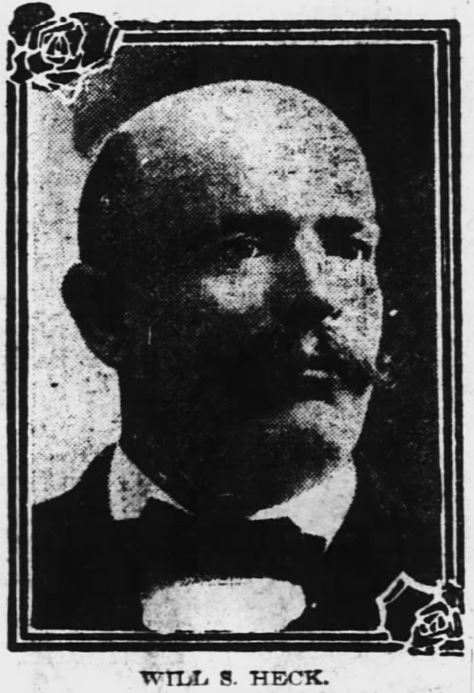
Will S. Heck lived at the crossroads of ink and spectacle. Born September 25, 1858, in Moores Hill, Indiana, he began as a Methodist minister and educator before stepping into the world of entertainment. By the 1890s, he had become a cultural force in Cincinnati — editing the Telegram, managing the Kohl & Middleton Dime Museum, and later founding Heck’s Wonderland.
Will S. Heck’s life traced a remarkable arc through the golden age of American entertainment. Born in 1853, he entered the show world through one of the most prestigious doors possible: the John Robinson Circus. Robinson was a titan of 19th‑century circus history, and Heck was trained directly under him. He traveled with Robinson’s company across the United States and even to Australia, gaining a rare, international education in circus logistics, performance, and the art of spectacle.
This early training shaped everything that followed.
After returning to Cincinnati, Heck operated Heck’s Avery Museum, a well‑remembered attraction that blended curiosity, education, and theatrical flair. When the museum era began to fade, he shifted into theatrical booking, becoming a respected agent who connected performers, midway acts, and traveling companies across the country. His deep knowledge of the business made him a natural leader in the emerging carnival industry.
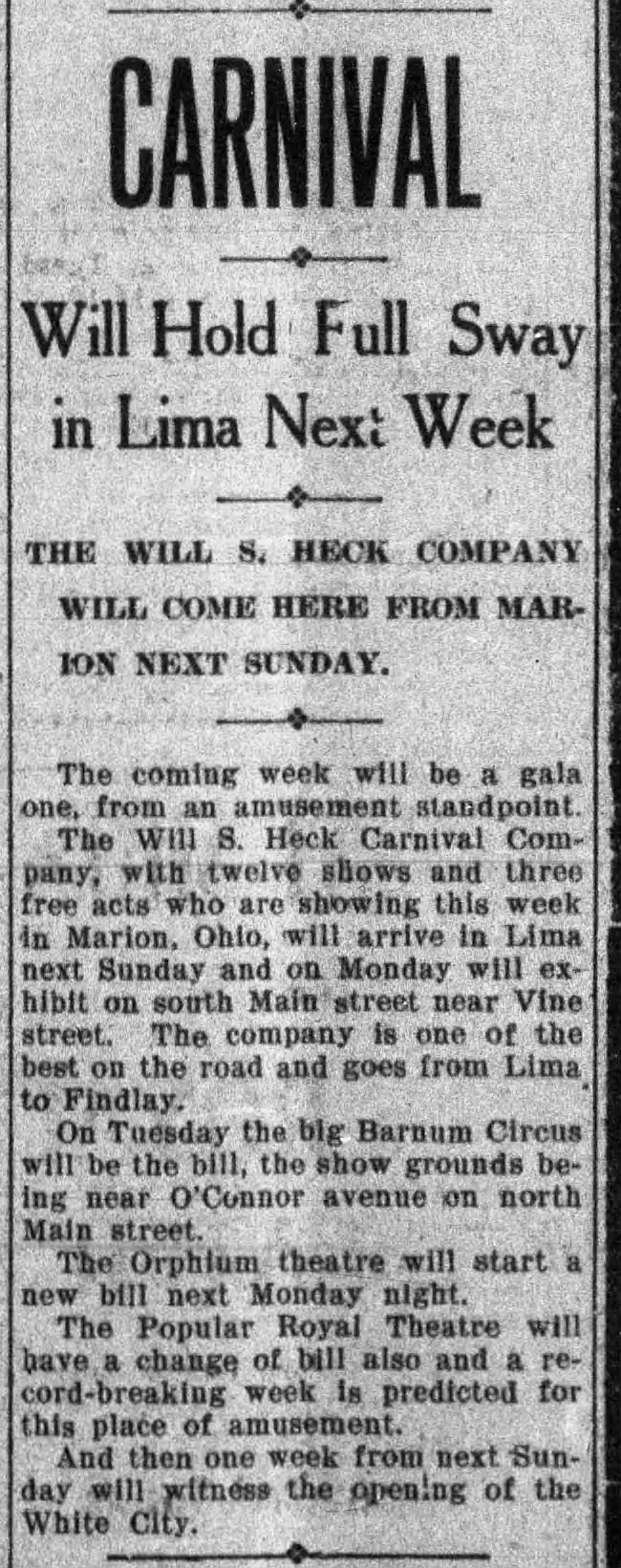
By the early 1900s, Heck was managing major carnival productions, including the Eagles’ Carnival, where he assembled the talent and oversaw the entire operation.
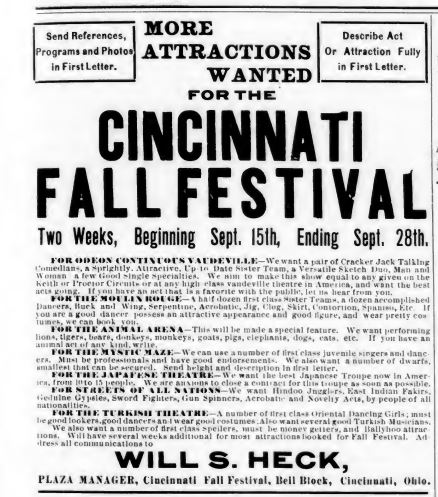
Will Heck served as Editor of the Theater Guide for Billboard, Plaza Manager for the Cincinnati Fall Festival, and promoter for the Cincinnati Zoo. His editorials and theatrical notices helped shape the language of the early American midway.
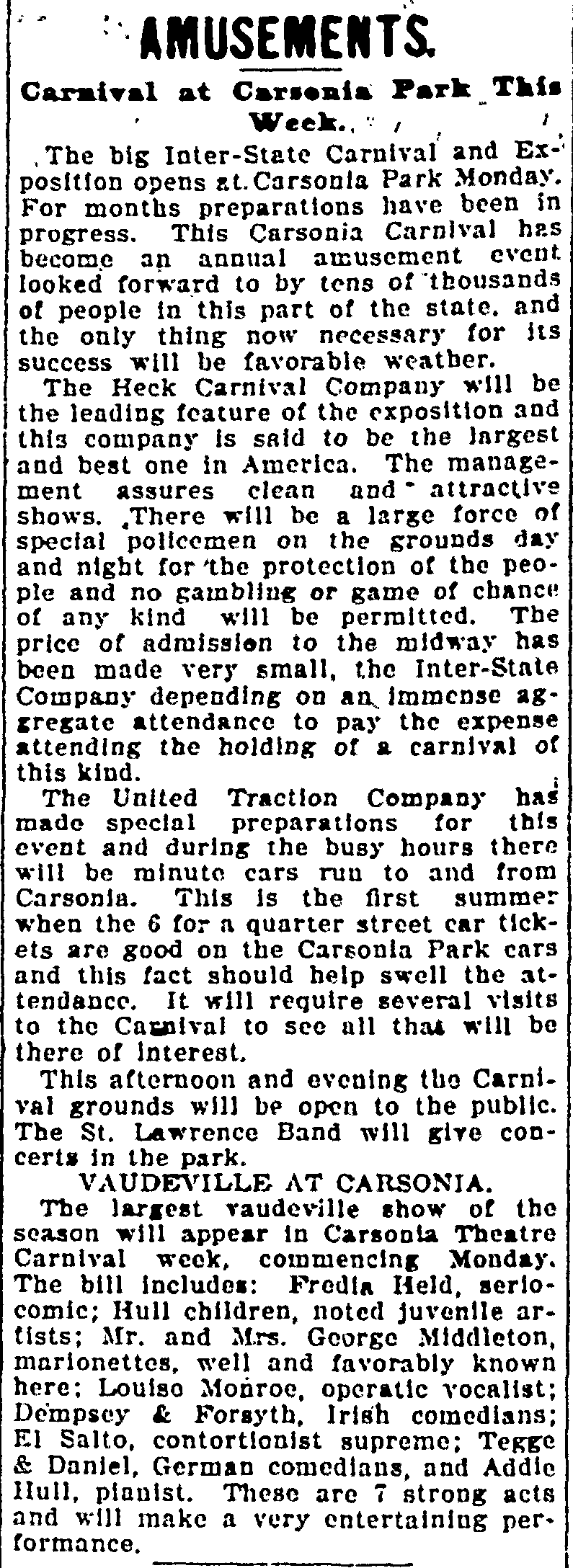
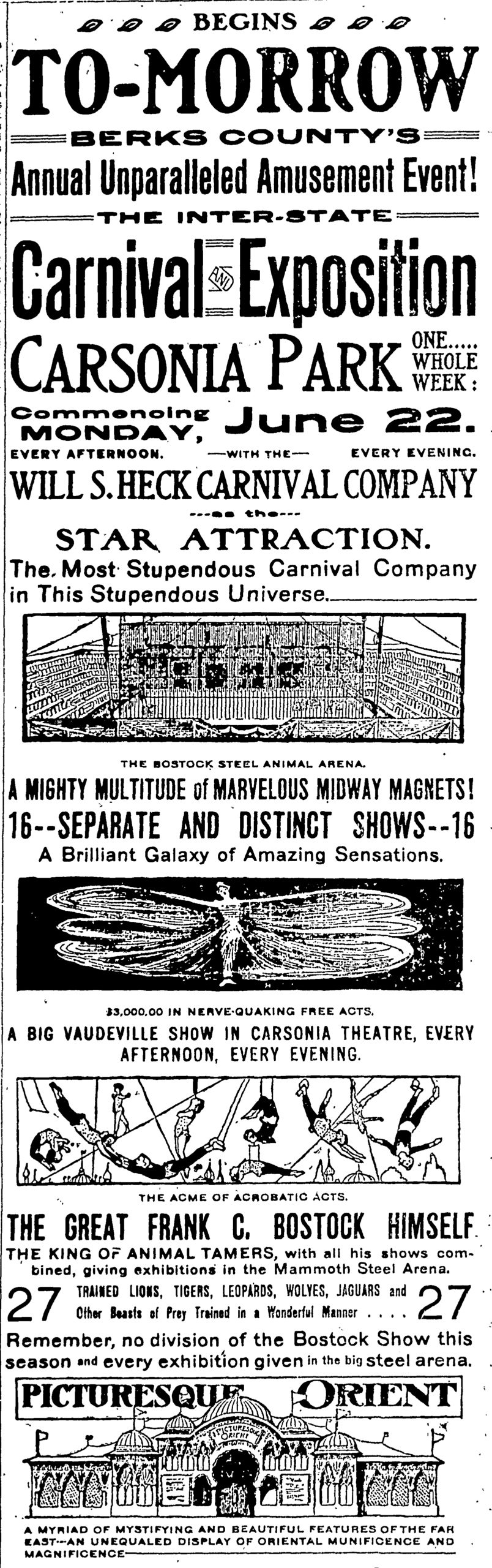
In 1908, he co‑headlined the Inter‑State Carnival at Carsonia Park with Frank C. Bostock. Posters proclaimed:
“The Will S. Heck Carnival Company — The Most Stupendous Carnival Company in This Stupendous Universe.”
Heck was a proud member of Cincinnati Lodge No. 5, B.P.O.E., and his fellow Elks stood by him in his final hours. His sudden death from a cerebral hemorrhage during the carnival’s opening day in 1908 shocked the entertainment community. Newspapers described him as a “prime favorite” among circus and theatrical people — a man whose experience, humor, and generosity were unmatched.
Will S. Heck stands as a bridge between eras — from the great Robinson circus trains to the rising American midway. His life carried the wisdom of the old show world. showman. He died on June 30, 1908, in Chillicothe, Ohio, the eve of opening his New Hippodrome Shows. The Elks Lodge escorted him home. Though he was originally buried at Spring Grove Cemetery, his remains were moved in 1948 to Cliff Fern Cemetery, where he now rests beside his wife, Olive Heck, reunited in legacy and memory. He is buried at Cliff Hill Cemetery in Versailles, Ripley County, Indiana.
It’s always a tragedy to lose someone, especially when they were on the verge of the top of their career. He knew how to use the Billboard, advertising, and what the newspaper did to bring crowds. He had connections such as the Elk’s. He ran a Dime Museum and created Heck’s Wonderland. He knew how to be a showman, and he was about to embark on the biggest street fair and carnival yet. He had been injured severely at the St Louis Fair andalso burned. He kept going. What a showman!