Traveling Carnival History, American Circus History, Sideshow History, and more . . .

Old Carnival Photos, Carnival History, Circus History, Traveling Shows

  • HOME
    • The Heart of The American Midway
  • THE AMERICAN MIDWAY SHOWMEN
    • Biographies of the American Midway
      • Biographies
        • Early Pioneers (1893 – 1905)
        • Expansion Era (1905 – 1915)
        • Growth of The Railroad Shows (1915 – 1929)
        • The Golden Age of The American Midway (1930s – 1950s)
        • Television, Highways, and Change of American Midways (1950s -1970s)
  • CARNIVAL COMPANIES
    • Carnival Company Library
  • COLLECTIONS
    • Old Carnival Midway Photos
    • History Of The American Carnival
      • Traveling Carnivals In America Brought Earliest Form of Entertainment
        • Patent Medicine Shows
      • Traveling Show History
        • How The Traveling American Carnival Grew
      • Railroad History Of Carnival and Circusl Trains
  • AMERICAN MIDWAY RESEARCH LIBRARY
    • How To Use The Research Library
  • ABOUT
    • A Brief Bio
      • Doc’s Midway Art
    • CONTACT
You are here: Home / Carnival History / World’s Columbian Exposition’s “White City”

World’s Columbian Exposition’s “White City”

February 26, 2015 By Editor

1893 Chicago World’s Fair

The Temporary City
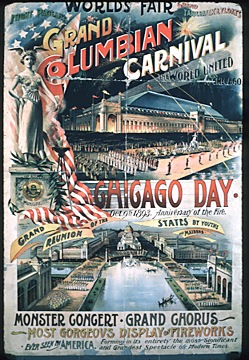
alt="World's Columbian Exposition's White City"

I’m continually amazed at the history of the World’s Columbian Exposition’s “White City”or Chicago Worlds Fair of 1893 because it was the beginning of all carnival related enterprises here in America. Without it’s inception it’s possible there would have been no carnival midways here or anywhere . . . Unimaginable !

Did you know that Most of the buildings of the fair were designed in the neo-classical style of architecture but constructed of lathe and plaster and made to be torn down after only a few months when the fair was over?

The area at the Court of Honor was known as The White City. The buildings were clad in white stucco, which, in comparison to the tenements of Chicago, seemed illuminated. It was also called the White City because of the extensive use of street lights, which made the boulevards and buildings usable at night.

The exposition itself was huge, it covered more than 600 acres on what had been a swampy piece of land of little value to the city.

The Midway Plaisance, where all the carnival action was and extending west from Jackson Park, once formed the southern boundary of the University of Chicago, which was being built as the fair was closing (the university has since developed south of the Midway). The university’s football team, the Maroons, were the original “Monsters of the Midway”. The exposition is mentioned in the university’s alma mater: “The City White hath fled the earth,/But where the azure waters lie,/A nobler city hath its birth,/The City Gray that ne’er shall die.”
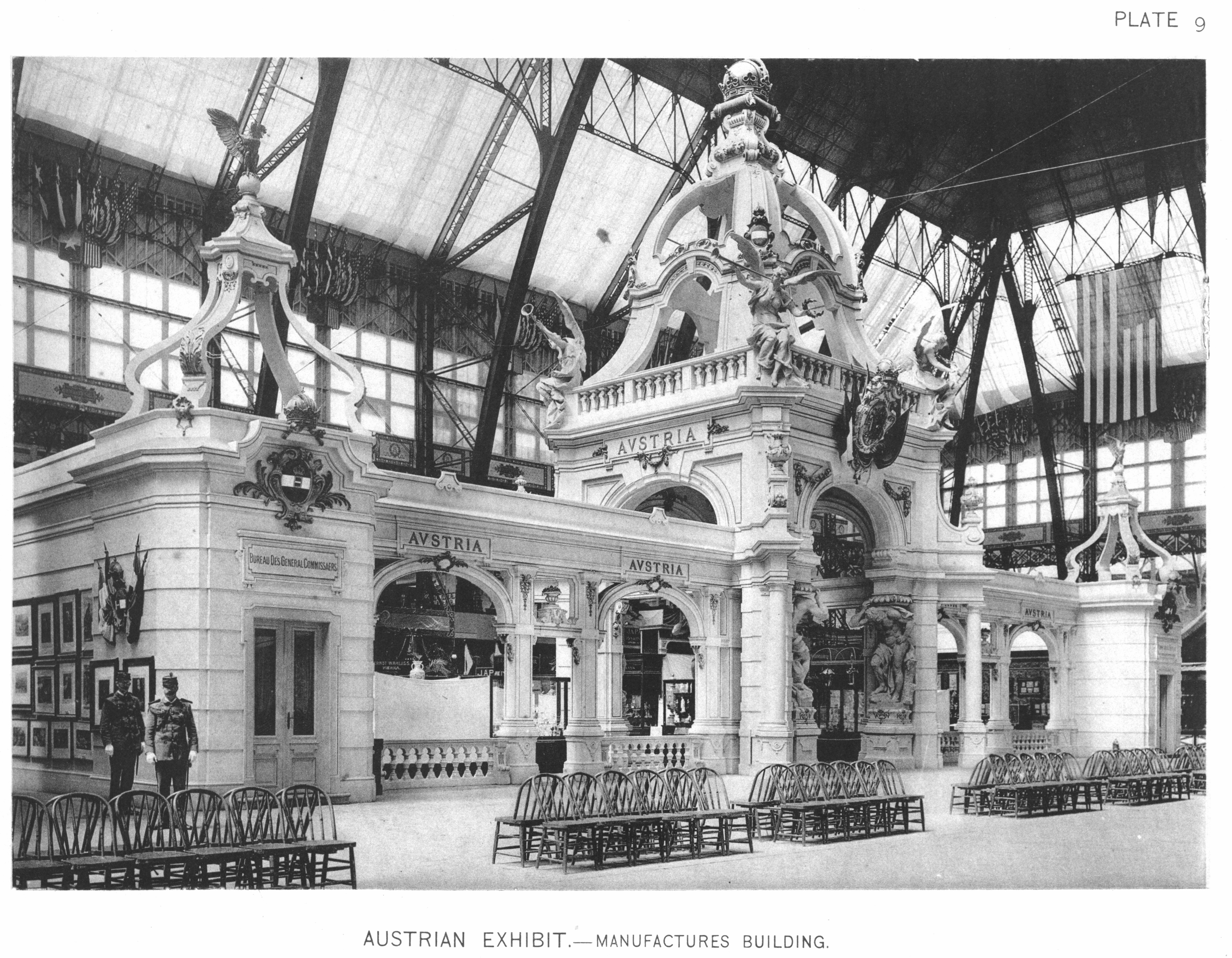
alt="1893 Chicago World's Fair"Almost all of the fair’s structures were designed to be temporary; of the more than 200 buildings erected for the fair, the only two which still stand in place are the Palace of Fine Arts and the World’s Congress Auxiliary Building. From the time the fair closed until 1920, the Palace of Fine Arts housed the Field Columbian Museum (now the Field Museum of Natural History, since relocated); in 1933, the Palace building re-opened as the wonderful Museum of Science and Industry. The second building, the World’s Congress Building, was one of the few buildings not built in Jackson Park, instead it was built downtown in Grant Park.

The cost of construction of the World’s Congress Building was shared with the Art Institute of Chicago, which, as planned, moved into the building (the museum’s current home) after the close of the fair.

Three other significant buildings survived the fair. The first is the Norway pavilion, a recreation of a traditional wooden stave church which is now preserved at a museum called Little Norway in Blue Mounds, Wisconsin. The second is the Maine State Building, designed by Charles Sumner Frost, which was purchased by the Ricker family of Poland Spring, Maine. They moved the building to their resort to serve as a library and art gallery. The Poland Spring Preservation Society now owns the building, which was listed on the National Register of Historic Places in 1974. The third is the Dutch House, which was moved to Brookline, Massachusetts.

The main altar at St. John Cantius in Chicago, as well as its matching two side altars, are reputed to be from the World’s Columbian Exposition’s “White City”.
Filed Under: Carnival History

Midway Slideshow

Books About Gibtown

  • Gibtown, Through The Camera Lens of Diana Phillips Book – Gibtown, Through The Lens of Diana Phillips

Carnival

  • John Dillinger's Car An short story in the site Sideshow World

Carnival and Circus Links

  • Buckles Blog Spot An interesting site full of carnival and circus information and photos from the past to present day.
  • Carousel World worlds leading collectors, and foremost authorities on antique carousels and carousel art.
  • Circus Blog A cool site loaded with historical information about the circus and carnival.
  • Circus Historical Society Circus Historical Society
  • Greater Show World….The Voice Of Show Business 1936 An amazing old magazine full of articles describing the Show Business Midways of 1936.
  • http://dick-dykes.blogspot.com/ A nifty site filled to the brim with cool videos, great stories and pictures.
  • National Carousel Association Index of North American Carousels
  • Sawdust and Spangles This is a great site for circus historians and circus model builders.

Carnival and Circus Museums

  • C. W. Parker Carousel Museum 1901 C.W. Parker Carousel Museum
  • Carnival World Museum American Carnival History Cultural Museum
  • Circus Historical Society Circus Historical Society
  • Circus World Museum Baraboo Wisconsin Circus History Museum
  • Herschell Carrousel Factory Museum Carousel History Museum
  • The Carousel Museum Carousel History Museum
  • The Ringling Circus Museum Ringling Cuircus Museum

Carnival and Circus Research Sources

  • Billboards Online at World Radio History Billboards from 1894 – 1921
  • New York Clipper New York Clipper Trade Paper – Carnival, Circus, Theater, Music
  • Old "Billboard Magazines" From A Bygone Era Old Billboard Magazines Starting From 1942 Featuring Ads And Stories From The Sawdust Trails Of The Times

Carnival Organizationa and Associations

  • Gibtown Bike Week I I S A and Showman’s Shrine Club sponsors Gibtown Bike Week Annually
  • International Independent Showmen's Association International Independent Showmens Associationor IISA, Gibsonton

Carnival, Circus, and Gibsonton Images

  • USF Showmen's Museum Photograph Collection USF Digital Collection of images portraying the life and times of American Carnival and Circus including Gibsonton

Side Show History

  • Carny World A link to some sideshow history and “freaks”
  • Shocked And Amazed Sideshow Seen Through A Modern Lens
  • Side Show World A site for great stories, photos and links to the backend of the midways of America
  • The Human Marvels A collection of historical “freaks” and brief discriptions of their histories

USF Showmen's History

  • Showmen's Oral History Project Andy Huse, assistant librarian in USF Tampa Library Special Collections, interviews association members involved in circuses, rodeos, and carnivals. Home-based in Gibsonton, Florida, the Showmen’s Association interviews document the careers of various sho
  • USF Showmen's Museum Photograph Collection USF Digital Collection of images portraying the life and times of American Carnival and Circus including Gibsonton

Magic Acts

Magicians Hilliar and Houdini

Midway Magic Acts – Houdini and Hilliar Were Great Friends  William J. Hilliar was a magician and author who edited Billboard‘s “Magic and Magicians” page for many years. He was also close friends with Houdini. “That friendship will always stand out as one of the dominating factors in my life,” said Hilliar. In 1933, Hilliar […]

Carnivals

HAROLD A. BUSHEA

Early Carnival Contracting Agent, Manager, and General Director Harold A. Bushea belongs among the important figures of the formative American traveling midway not because his name appeared above the title of a famous carnival, but because he helped make the organization behind one of those early carnivals work. Before entering the carnival business, Bushea was […]

Carnival Movies

Showbiz And The Big Screen

Hollywood And The Midway Movies Come To The Tented World If you’re like me, you love old films that have anything to do with ‘The Biz’. Victor Mature is great in the 1959 classic: The Big Circus which is an example of a little known Hollywood gem. Elvis Presley in Roustabout features colorful scenes from the […]

Copyright © 2026 · Docs Midway Cookhouse · All rights reserved.