The Barber Who Built a Railroad Show
This page is part of an ongoing effort to recover the stories of early carnival show owners that were nearly lost.
1882–1943
Founder of Williams Standard Shows – 1915 – 1936 and Ben Williams Shows- 1937 – early 1940s
David “Doc” Rivera’s Observations on Williams Standards Shows October 26, 2020:
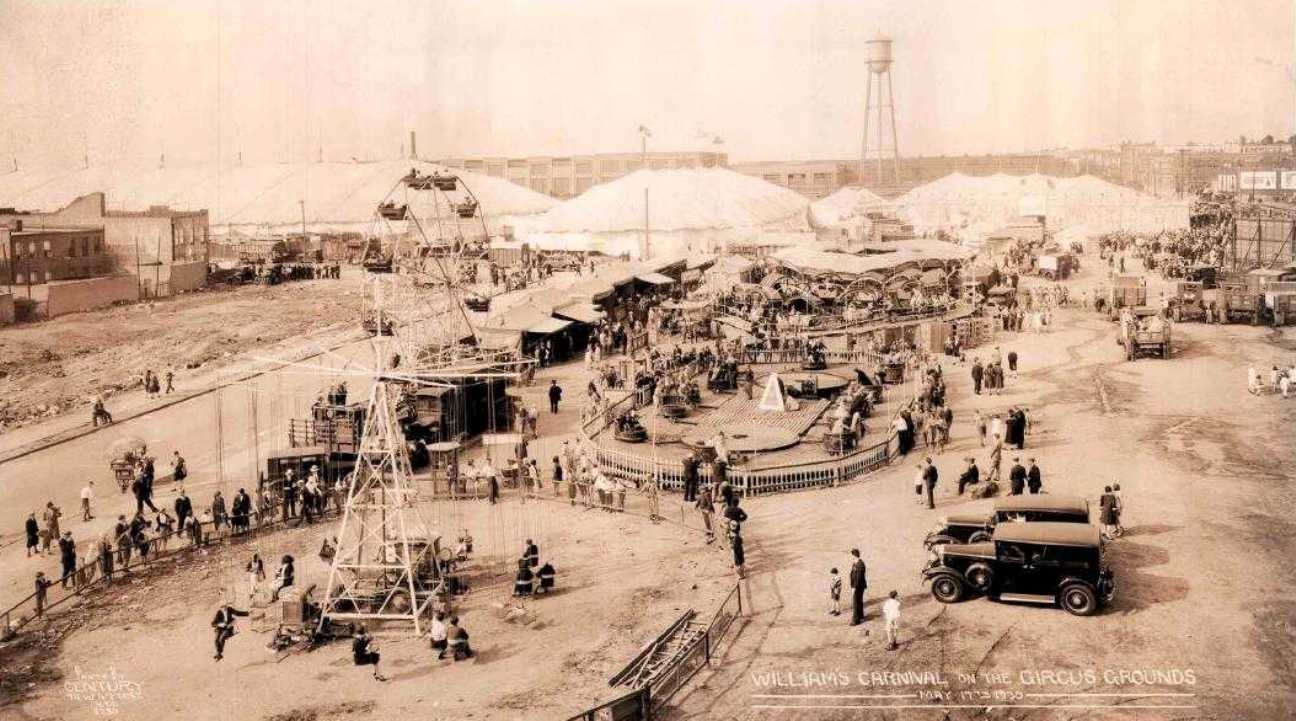
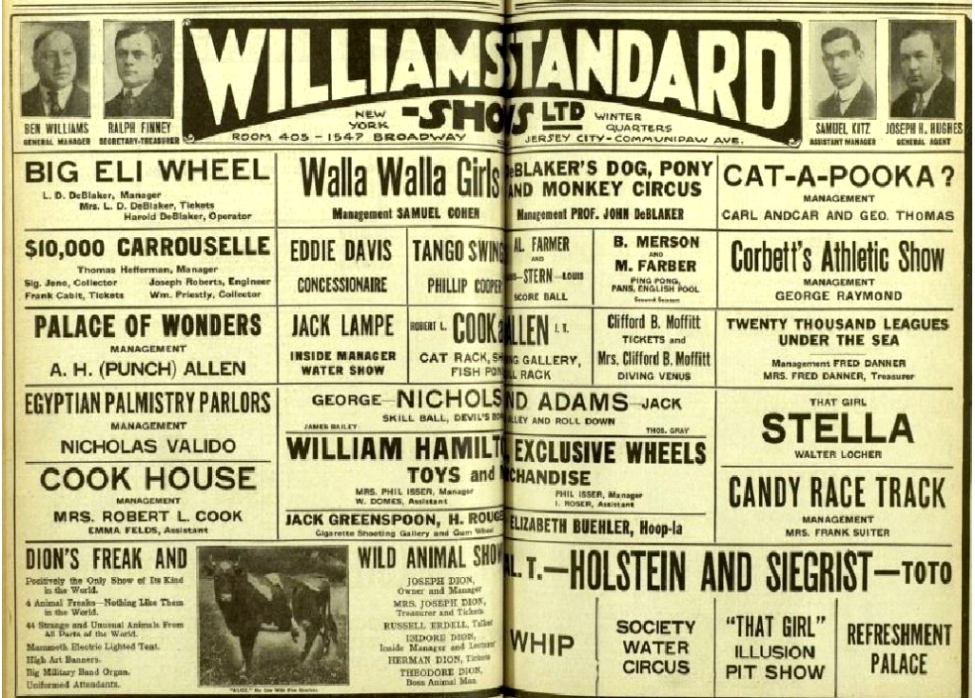
“Many early shows that were successful at the time carnival business was in its infancy went into the history books relatively unremembered when the Great Depression hit America. This one was the Williams Standard Show, a show that was instrumental in the formation of the carnival business as we know it. The ad (See ad below) is from A May 1918 Billboard, and the photo of the Williams Midway below, is dated 1930, twelve years later. “
Benjamin “Ben” Williams was one of the early outdoor amusement operators whose name deserves to be remembered in the history of the American and Canadian carnival business. Born on August 8, 1882, in Londonderry, Colchester County, Nova Scotia, Williams began life far from the midway. Before becoming a showman, he worked as a barber in Sydney, Nova Scotia.
His connection to the outdoor amusement world began through the Sydney Fair, where he served as an active fair official. It was there that Williams was introduced to the excitement of the midway—the rides, concessions, show fronts, animals, canvas, music, crowds, and traveling people who made up the “open tent” life. Eventually, he sold his barbering business and entered show business himself.
From those beginnings, Williams founded Williams Standard Shows, which became one of the respected carnival organizations serving the Maritime Provinces and the Northeastern United States. By the late 1910s, Williams Standard Shows was a substantial operation, maintaining offices in New York City and winter quarters in Jersey City, New Jersey.
A 1918 Billboard advertisement for Williams Standard Shows shows a large midway with rides, concessions, animal attractions, and exhibitions, including the Big Eli Wheel, a carousel, the Whip, Palace of Wonders, Twenty Thousand Leagues Under the Sea, Egyptian Palmistry Parlors, Wild Animal Show, Dog, Pony and Monkey Circus, and “That Girl Stella,” connected to the famous “Have You Seen Stella?” attraction of the period.
One of the most important moments in Williams’ career came in late 1919 or early 1920, when Williams Standard Shows acquired the Joseph G. Ferrari Shows in its entirety. Contemporary reports described the transaction as one of the largest deals in the Eastern carnival business. The acquisition included wagons, show fronts, rides, animal attractions, and other midway equipment, linking Williams permanently to the legacy of Joseph G. Ferrari and the early development of the organized carnival business.
Williams married Margaret Morrison of Englishtown, Victoria County, Nova Scotia. They had two daughters, Mildred and Eunice. Margaret died in New York on July 24, 1935, and was buried in Sydney, Nova Scotia.
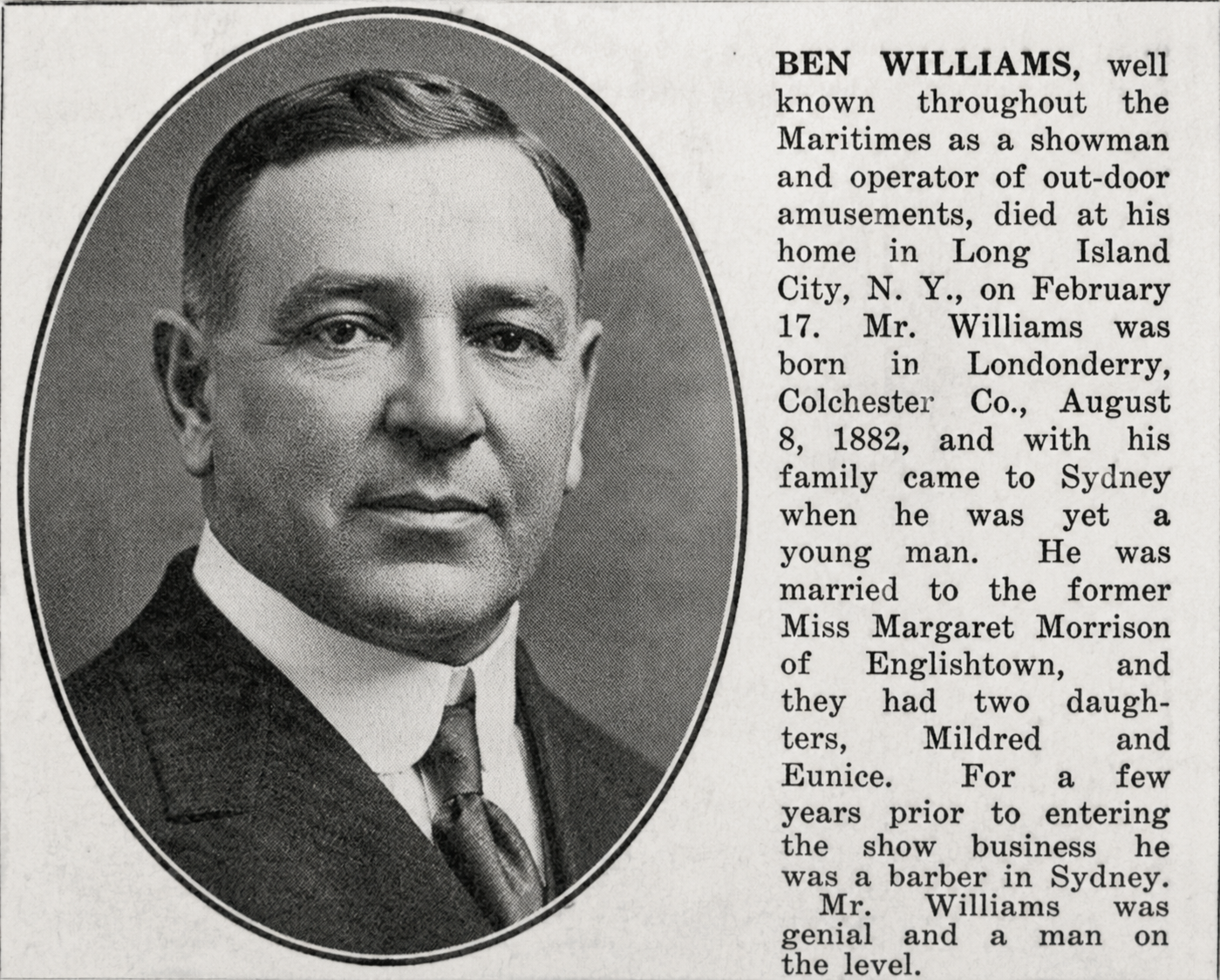
Ben Williams died on February 17, 1943, in Long Island City, Queens, New York, after an illness. Newspaper tributes remembered him as genial, sincere, popular, and honest. One article called him “the man on the level.” He was remembered not only as a show operator, but as a family man and respected figure in the outdoor amusement world.
Though Williams Standard Shows eventually disappeared from the midway, its place in carnival history remains important. The show was part of the generation of early carnival organizations that helped shape the business as it moved from small fair attractions into organized traveling railroad shows.
Ben Williams’ story is the story of a man who left a barber shop in Nova Scotia, followed the call of the midway, built a railroad carnival, acquired one of the important early carnival shows, and earned the respect of those who knew him.
He deserves to be remembered.
Key Facts
Full Name: Benjamin “Ben” Williams
Born: August 8, 1882, Londonderry, Colchester County, Nova Scotia, Canada
Died: February 17, 1943, Long Island City, Queens, New York
Burial: Sydney, Cape Breton County, Nova Scotia, Canada
Occupation: Barber, fair official, carnival owner, railroad showman
Show: Williams Standard Shows
Wife: Margaret Morrison Williams
Children: Mildred Williams and Eunice Williams
Known For: Founder of Williams Standard Shows; purchaser of Joseph G. Ferrari Shows; respected Maritime carnival operator
Remembered As: “The man on the level”
Benjamin “Ben” Williams, founder of Williams Standard Shows, was remembered throughout the Maritime Provinces as a respected carnival operator and “the man on the level.”
Williams Standard Shows Midway, c. 1930
Williams Standard Shows midway, circa 1930. David Rivera noted that many successful early carnival shows, including Williams Standard Shows, became relatively unremembered after the Great Depression, despite their importance in the formation of the carnival business.
1918 Billboard Advertisement
Williams Standard Shows advertisement from Billboard, May 1918, showing the scale of Ben Williams’ midway before the acquisition of Joseph G. Ferrari Shows.
The Joseph G. Ferrari Shows Acquisition
Below Is The Article For The Ferrari Acquisition Notice in the newspaper the Daily Gleaner, Fredericton, York, New Brunswick, Canada · Saturday, January 10, 1920
Williams Standard Shows acquired Joseph G. Ferrari Shows in its entirety in late 1919 or early 1920, making Ben Williams an important link in early carnival succession history.

Fredericton, York, New Brunswick, Canada · Saturday, January 10, 1920
Research Notes
The previous Find A Grave memorial incorrectly links Benjamin Williams to Mary Jane Goldie Williams as his spouse. Research indicates that Ben Williams’ wife was Margaret Morrison Williams, born December 23, 1885, in Englishtown, Victoria County, Nova Scotia, and died July 24, 1935, in Manhattan, New York.
Sources used in this profile include census records, newspaper obituaries, Billboard trade notices, David Rivera’s carnival archives, and contemporary reports on Williams Standard Shows and the Joseph G. Ferrari Shows acquisition.
Do you have photographs, family stories, letters, or documents about this person?
Together we can preserve their history for future generations.