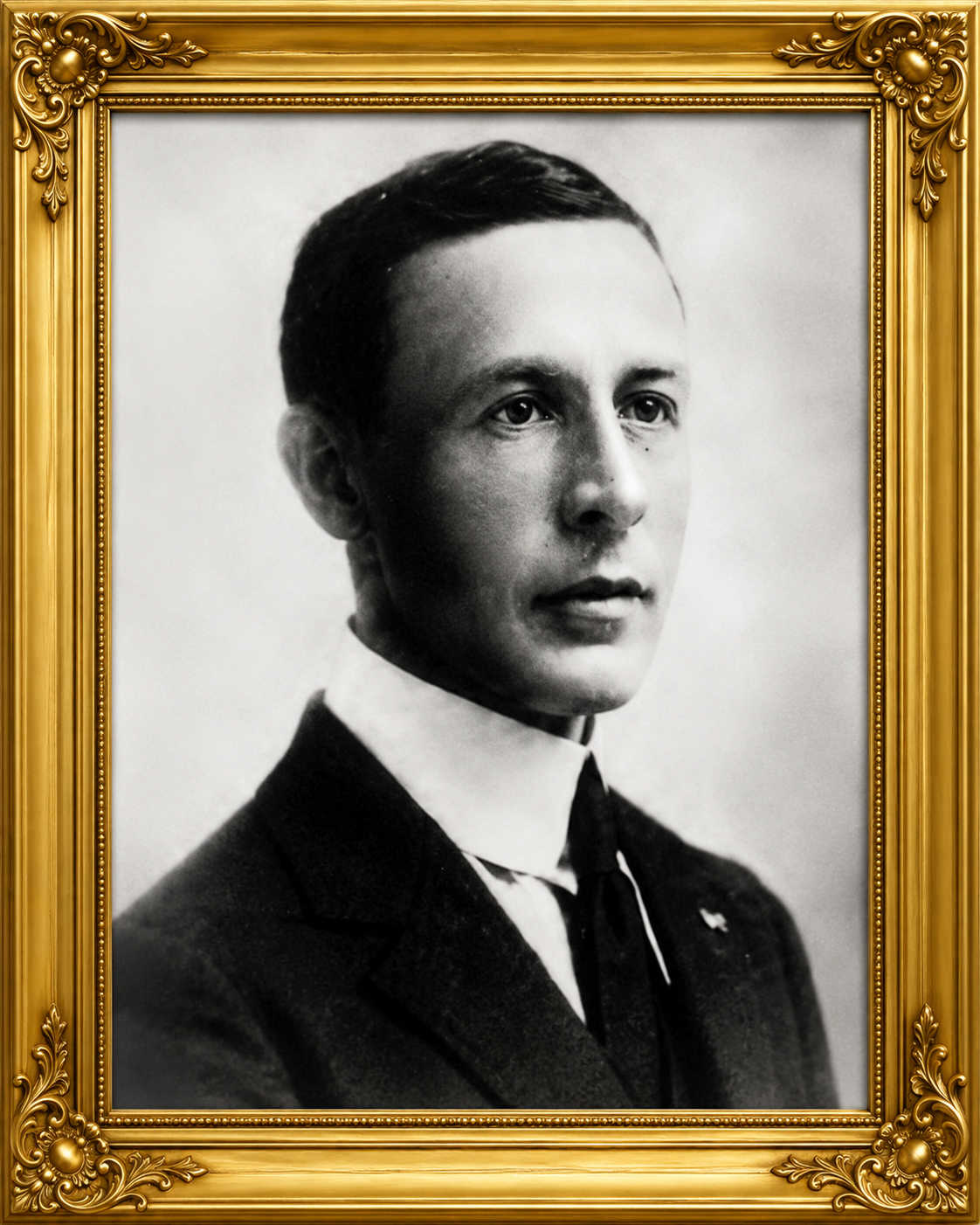
From Circus Performer to Builder of the American Midway
George Francis Dorman spent much of his life in the amusement business, but his place in carnival history began almost by chance.
Born in Alliance, Ohio, on August 5, 1879, Dorman entered show business while still young, first as a circus performer. That early experience gave him more than an introduction to entertainment. Circus life required physical ability, adaptability, and a willingness to work wherever needed—qualities that would become useful when Dorman found himself helping build something quite different.
In 1898, Frank W. Gaskill asked the young performer to help with a street fair.
Dorman said yes.
That decision placed him near the beginning of the organized American traveling midway.
From Circus Performer to Carnival Builder
Dorman later recalled that Frank W. Gaskill asked him to assist with the 1898 street fair in Alliance. Afterward, Gaskill engaged him to go to Canton, Ohio, where Dorman helped Joe Conley build the properties for the new carnival organization that would go on the road in 1899.
This was not simply a matter of joining an established carnival. The organization itself was being created.
Show fronts had to be built. Attractions had to be assembled. Canvas, scenery, ticket boxes, and equipment had to be prepared. Someone had to learn how all those pieces worked together and how they could be moved from one engagement to another.
Dorman was learning the carnival business by helping build one.
Mary Gaskill‘s later recollection gives us some idea of what these early properties looked like. She remembered the first Canton midway as crude by later standards, with tents and temporary board fronts covered with lithographs, although Frank Gaskill was already giving careful thought to the design and appearance of the attractions.
The Alliance Amusement Connection
Dorman’s entrance into Gaskill’s organization also belonged to a larger Alliance, Ohio, amusement story.
Gaskill had deep roots in Alliance before becoming a carnival owner. He had operated businesses there and had experience in theatrical management before moving to Canton. His business activities had also brought him into contact with traveling entertainment organizations.
The Sourbeck family was part of that same Alliance amusement world.
George W. Sourbeck, uncle of young Frank “Harry” Sourbeck, was connected with theatrical entertainment in Alliance, and the historical record places Gaskill and George W. Sourbeck in the same local circle years before the traveling carnival emerged.
That earlier connection helps us understand what followed.
Dorman was an Alliance man. Gaskill knew the local entertainment and business community. The Sourbecks had amusement connections of their own. Before long, Dorman and young Frank “Harry” Sourbeck would both be part of the developing carnival circle around Gaskill.
These men did not emerge from nowhere when the American carnival began to take shape. Some of the relationships and experiences that fed the new industry had roots in the local theatrical, circus, business and amusement communities that preceded it.
Alliance was one of those places.
Selling the First Ticket
When Gaskill’s new organization began touring, Dorman was given another responsibility: the front-gate ticket box.
According to Dorman’s later account, he sold the first ticket ever sold by Gaskill’s new organized traveling amusement company.
It was a small transaction with significance that could only be understood in hindsight.
The company opened at Chillicothe, Ohio, during Decoration Day week in 1899. Sources remembered the organization’s name in several forms, including the Canton Carnival and Industrial Exposition Company, Canton International Exposition and Carnival Company and Canton Carnival Company. The American Midway Archives preserves those variations rather than silently choosing one name for all of them.
Mary Gaskill later remembered that the first organization left Canton in one baggage car and returned at the end of the season by special train.
Dorman had watched—and helped—that transformation happen.
Learning Every Part of the Show
Dorman’s role quickly went beyond selling tickets.
A contemporary New York Clipper account from 1899 placed George Dorman in charge of the Moorish Theatre on Gaskill’s midway. The same roster reveals the extraordinary variety of jobs required to operate the show: managers, treasurers, construction men, theater managers, animal handlers, canvas men, ticket personnel and a press agent.
This was a traveling workforce.
For a young man curious enough to learn, the midway was an education unlike anything available in a classroom.
Dorman had come from the circus with the physical strength and practical experience of a performer. With Gaskill, he learned another side of show business—how a midway was constructed, managed, promoted and operated.
Those lessons would stay with him.
A Circle of Young Showmen
Dorman was also learning alongside men whose names would repeatedly appear in the history of the early carnival.
Among them were Bill Rice, Harry Polack and Frank “Harry” Sourbeck.
Harry Sourbeck’s life would be tragically brief. He died in January 1899 at only twenty years old. But the connection among these young men continued into the story of the American Amusement Company, where Dorman, Rice, Polack and the Sourbeck interest came together in an early attempt to strike out beyond Gaskill’s organization.
The company itself lasted only a few weeks.
Its importance lies in the men who came through it.
Years later, Bill Rice remembered organizing and booking the show by mail and opening it in Toledo, Ohio. Rice jokingly called it a “Sears-Roebuck show,” but when he looked back on the venture in 1925, he specifically remembered two men who had been with him: George F. Dorman and Harry Polack.
Rice said they afterward became “real showmen.”
Dorman certainly did.
From Employee to Owner
The young circus performer who had agreed to help Gaskill did not remain an employee.
In 1900, Dorman became one of Bill Rice’s partners in a short-season mail-order street-fair company.
It was another step in Dorman’s education as an owner and operator. The men who had learned how to build and work someone else’s midway were beginning to create enterprises of their own.
Over the following years, Dorman would move through partnerships and organizations as the carnival business itself matured.
Rice & Dorman Shows
Dorman would again join Bill Rice in what became the Rice & Dorman Shows.
This later partnership represented a very different stage of Dorman’s career from the young man helping construct Gaskill’s properties in Canton. He was now an experienced showman with years of practical knowledge behind him.
Rice & Dorman became one of several important organizations in Dorman’s long amusement career.
Eventually, the show was purchased by Morris & Castle, becoming part of the nucleus of the Morris & Castle Shows.
The equipment might change hands.
The showman’s knowledge went with the man.
Solomon & Dorman and Other Partnerships
At another point in his career, Dorman partnered with Sam Solomon in the Solomon & Dorman Shows.
Later, he served as secretary-treasurer of the Couse Greater Shows.
These partnerships are important because they demonstrate how the carnival industry actually grew. The history is not a straight line of individual men each operating one company for life. Showmen worked for one another, became partners, separated, reorganized, purchased equipment, sold shows and joined other organizations.
Dorman’s career moved through that interconnected world for decades.
The young men who had learned together remained part of a much larger traveling community of show owners, performers, concessionaires, ride operators, agents, staff and independent operators.
They competed for fair dates and contracts, but they also gathered at conventions, exchanged stories and “jackpots,” formed partnerships and friendships, and encountered one another repeatedly as their careers crossed the country.
They were a community.
A Lifetime in the Amusement Business
By 1939, four decades had passed since Dorman helped Gaskill build that early organization.
The carnival business had changed enormously.
The crude false fronts and single baggage car of the Gaskill period had given way to larger railroad shows, increasingly sophisticated rides, electrical illumination, motorized transportation and an established outdoor-amusement industry.
Dorman had lived through that transformation.
He had been a circus performer, construction man, ticket seller, attraction manager, partner, carnival owner and company officer.
What makes his career particularly valuable to the history of the American midway is that he knew the business from the ground up.
George Dorman Remembered the Beginning
Decades later, Dorman could look backward and remember a time when none of them could have known what they were helping create.
Mary Gaskill expressed much the same idea in 1925 when she remembered Dorman and the other people in that first organization. She wrote that they could scarcely have imagined they were participating in the beginning of what would become an important part of the amusement industry.
George Dorman had simply been a young circus performer from Alliance who was willing to help Frank Gaskill with a street fair.
But he stayed.
He learned how to build the show, how to operate it and how to become an owner himself. Along the way, he became part of an extraordinary community of men and women who were creating an industry while they were still learning what that industry could become.
Perhaps that is the most important part of George F. Dorman’s story.
He was there when the American midway was being built—and he helped build it.
Sources & Resources
- The Billboard, March 21, 1925 — George F. Dorman retrospective, A Pictorial History of the American Carnival, p. 47. Dorman’s account of his early circus career, the 1898 Alliance street fair, joining Gaskill in Canton, selling the first ticket, his partnership with Bill Rice, Rice & Dorman Shows, Solomon & Dorman Shows, and Couse Greater Shows.
- The Billboard, March 21, 1925 — Mrs. Frank Gaskill’s recollections of the beginnings of the Gaskill organization, including the early Canton properties and the development of the traveling show.
- New York Clipper, July 1, 1899, p. 3 — Contemporary roster of Gaskill’s organization identifying George Dorman in charge of the Moorish Theatre and Harry Sourbeck at the main entrance.
- New York Clipper, September 30, [year from your clipping] — Alliance Gun Club report naming George W. Sourbeck and Frank W. Gaskill, documenting the earlier Alliance connection.
- New York Clipper, January 25, 1890, p. 13 — Sourbeck’s Opera House, Alliance, Ohio; C. W. Sourbeck listed as manager.
- Bill Rice retrospective, The Billboard, 1925 — Rice’s recollection of the early American Amusement Company and George Dorman and Harry Polack.
- Genealogical/vital records — George Francis Dorman’s birth, death and burial information, as applicable to the biography.