Carrying the Chicago Midway Plaisance onto the Road
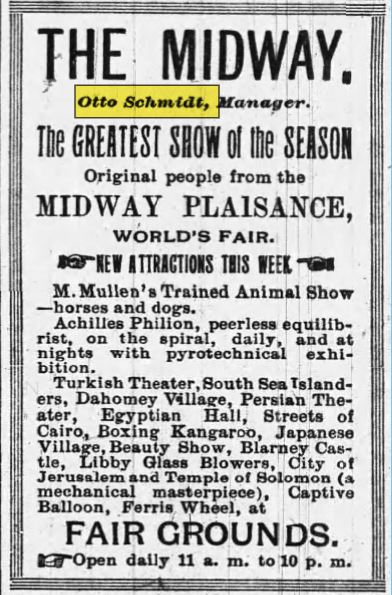
Otto Schmidt belongs at the beginning of the story of the traveling American midway.
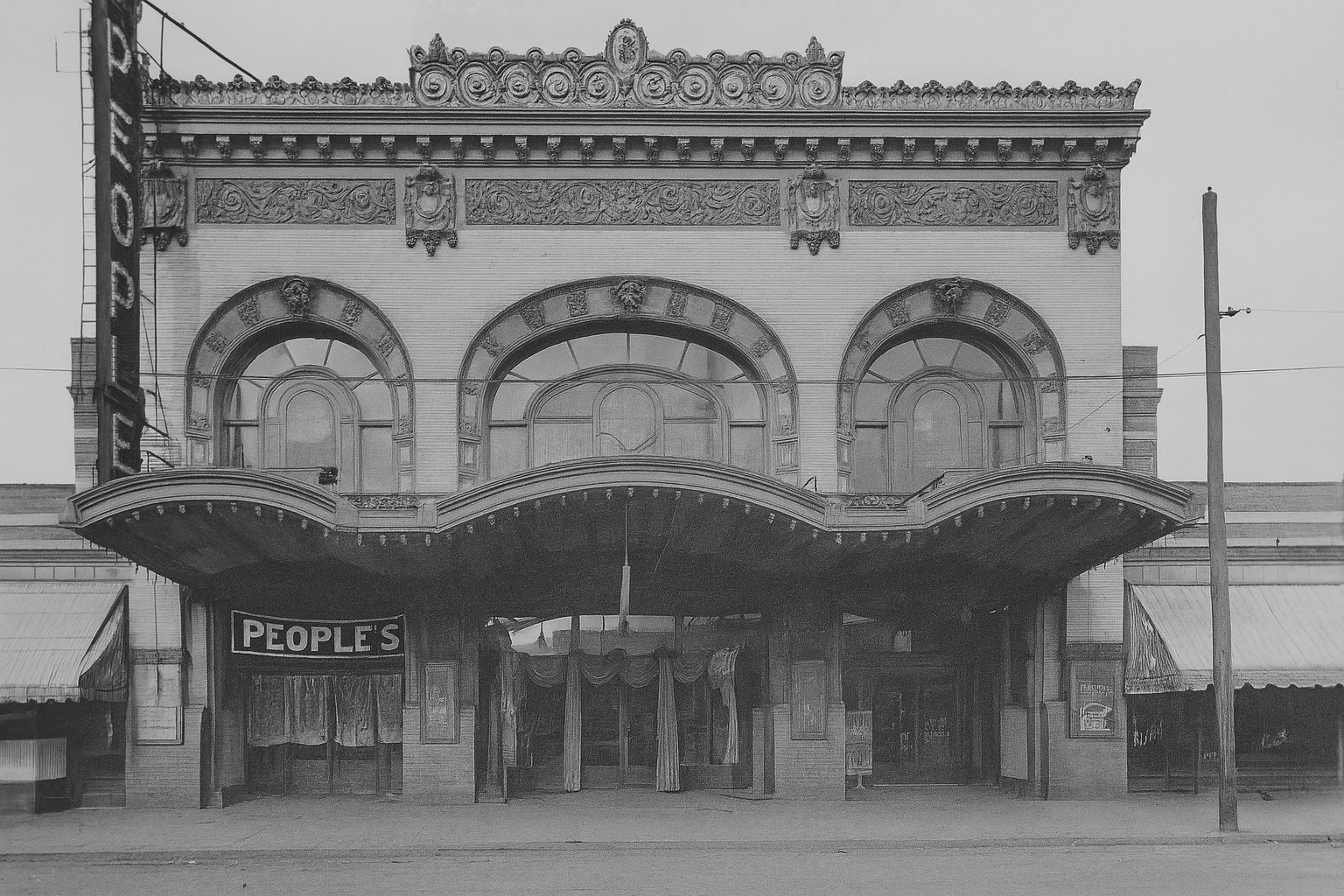
The People’s Theatre, Chicago, April 1893 — where Otto Schmidt first dreamed the traveling carnival into being. In 1893, this stage became the launchpad for a new American tradition. Scene painter, stage manager, visionary — Schmidt’s brush and voice helped shape the Midway’s future.
Otto Schmidt began as a scene painter at Chicago’s People’s Theater, but his vision extended beyond painted backdrops. He also worked on the building of the Chicago World’s Fair before its opening in 1893 and spoke with actors, show people like Buffalo Bill, and people from all over the world, like Frank Bostock, and learned firsthand what was involved in building a midway – the Midway Plaisance, just like the one at the Columbian Exposition – Chicago World’s Fair. With financial support from Joe Baylies, he organized the Chicago Midway Plaisance Amusement Company in 1893,
Otto Schmidt became the builder of the first traveling midway. He did not have to invent the attractions he carried away from the Midway Plaisance of Chicago’s 1893 World’s Columbian Exposition. He took shows, performers, theatrical scenery, props, animals, and the people who already knew how to present them.
His company traveled to Toledo, St. Louis, Texas, and New Orleans in its first season. Transported on a special train carrying more than 500 people, Schmidt’s show revolutionized the idea of a traveling amusement enterprise.
His problem was different:
How do you take a spectacular entertainment environment created for a stationary setting and make it move?
From the People’s Theatre to the Midway
Schmidt was a scenic painter and stage manager associated with Chicago’s People’s Theatre. That background gave him access to the practical machinery of theatrical illusion: painted scenery, lighting, props, facades, stagecraft, and performers.
Contemporary material preserved by The American Midway Archives places him in the People’s Theatre world in April 1893. A later German-language Chicago newspaper article in 1896 identified him as a former manager of the People’s Theatre while reporting on subsequent theatrical events.
He Took the Shows With Him
The shows were not simply an abstract imitation of the Midway.
Schmidt carried existing attractions and performers into the traveling enterprise.
Later pioneer accounts preserve a remarkable picture of what that early midway looked like. Howard P. Jones, a talker who encountered the organization at St. Louis in September 1894, remembered the Dahomeyan Village, Animal Show, Madam Akoun’s Streets of Cairo with camels, Turkish Theater, Patsy Brannigan’s Irish Village, Persian Village, “Mama’s” Illusion Show, German Village, and Algerian Village.
Jones also remembered talkers Parson Taylor, Jim Barry, Bakara, Dan U. Robinson, and Tobin, with George Hyatt and Ida Daily present.
After surveying what Schmidt had assembled, Jones concluded:
“Now, I call this a carnival company.”
The roster and Jones’s recollection are preserved separately in our permanent research record rather than being silently blended with later historical reconstructions.
A School Into the Unknown
The World’s Fair Midway Plaisance had been stationary.
Schmidt’s enterprise attempted to make that kind of environment mobile before the carnival industry had developed a mature transportation and rebuilding system.
The equipment could create the magic.
It had not been designed to move the magic.
Theatre-made scenery and props had to be dismantled, loaded, transported, unloaded, and rebuilt. Material traveled exposed on open flatcars, while later recollection also documents boxcars in the larger organization.
Delicate theatrical material did not yet have the specialized crates, cases, loading systems, and purpose-built transportation equipment that later traveling shows would develop.
Rain, Mud, Canvas, and Carpenters
Taking theatrical scenery outdoors created another set of problems.
Rain soaked painted scenery and canvas. Mud complicated construction. Timber, large tarpaulins, painted banners, scenery, and temporary facades had to transform an empty lot into another world.
Howard Jones later remembered frames being built for the different shows, nearly two complete sets of scenery, and carpenters being sent ahead to prepare the next stand. Even with that effort, a week could be lost between engagements.
Here’s what Howard Jones, part of the staff of the Chicago Midway Plaisance Amusement Company and talker at the Chicago World’s Fair in 1893, remembered about Otto Schmidt in an article he wrote in the Billboard June 13th, 1925. The Summer Special, Page 1
“The idea of the carnival originated from Otto Schmidt, who was a scene painter and stage manager at the People’s Theatre in Chicago.
“About July 1893, Joe Bailey’s, owner of the People’s Theater having sold his lease to the theater to Colonel Hopkins, the originator of the 10 cent, 20 cent, 30 cent idea and theater prices, was talked into this by Mr. Otto Schmidt. His idea was to take the important attractions of the Midway at the World’s Fair in Chicago out to the general public all over the United States. And that way they could play fairs that were already active. The fairs, the state fairs, were not as they were now. The state fairs were events where they had Car Races and Grandstand features, so this idea to actually take the attractions to the two state fairs that were at the Midway Plaisance at the Chicago World’s Fair was a very new idea. The winter of 1893 and 1894, Otter Schmidt organized his first company and tried it out in Toledo, OH. He made the jump there to St. Louis, MO, then to New Orleans, LA, where a disastrous season was closed.
The show was reorganized in Chicago in 1895 on a larger scale. Joe Bailey’s advancing $35,000.To improve upon the original. Season of 1893. The first stand was the New York State Fair at Syracuse on a special train there were loaded flat cars 6 box cars, and 540 people went to Syracuse on a special train from Chicago. Among the attractions, its Oriental towers 60 feet high, the reproduction of The Blarney Castle, and all other shows with panel scenery fronts presented a more attractive appearance than many of the present day carnivals which were mostly having state fairs.
It was necessary under the construction of this carnival company to build frames for the different shows and almost two complete sets of scenery, sending their carpenters ahead to the next stand to get things ready for the show. Even at that, a week was lost between each stand. A stand is now called a spot.
Now, in regard to the carnival ideas being different from the present-day shows, the organizations now on the road carry from one to a dozen or more riding devices. One of the contributors to the special article on the subject is this year’s spring edition of the Billboard, seemed to think that because we covered over the Persian Theatre, a part of the Streets of Cairo, the illusion shows, Blarney Castle, and Oriental shows with what he called Tarpaulin tops. They were not classified with later carnival period. However, we had a few shows under tents already, namely Tony White Circus, Frank Bostock’s, Helen Conger, The old Plantation, Persian Theatre, Lee’s Big Snakes, Bosco and World, all with Banners and Bally platforms the same in appearance at the present day Gilly shows carry to recognize that most of the attractions that were on the midways in the late 1800s all had to be built. They were not on a mounted trailer or something that could just be unfolded and run up and down the highways. Trains were the mode of transportation to get people to and from. To build these whole carnivals at one location with wood, saw, paint workers, a lot went into it. It’s important to note that the Streets of Cairo attraction carried passengers around what could be considered a ride”
Schmidt also rotated two sets of tarpaulins to cope with wet canvas and drying time.
The invisible labor was part of the invention.
The DeKreko Lesson
Jean DeKreko had been a performer at the 1893 World’s Columbian Exposition. His later account therefore matters not simply as reminiscence, but as testimony from someone who knew the stationary Midway and then lived through the emerging traveling-show world.
Jean Azize DeKreko remembered him vividly: a German-born painter turned showman who built entire midways out of tarpaulins, carpenters, and imagination.
In 1894, Jean met Schmidt in St. Louis, where Schmidt organized the Arab troupe into Akron’s Algerian Village. Jean described walking past Schmidt’s attractions — the Dahomeyan Village, the Irish Village, the Persian Village, the German Village with its orchestra, “Mama’s Illusion Show,” and the Streets of Cairo, complete with camels. It was a living mosaic of cultures, performers, and illusions.
Schmidt’s operation was unlike anything that came after:
- No railroad cars – loaded everything on flatcars where things constantly blew off
- No permanent fronts – had to build a new front each time
- Few tents — tarpaulins served as roofs
- Everything was built on-site by painters, carpenters, and canvasmen
- Two sets of tarpaulins rotated from town to town
Jean called it a carnival company even though the term had not yet been invented.
Schmidt’s staff included Howard Jones, Charles M. McDonald, Harry Hamilton, Harry Potter, Taylor Austin, Bob Cato — and Charles DeKreko, proving the DeKreko brothers learned the craft directly under him.
His aggregation traveled from St. Louis to Mobile, Montgom
The DeKrekos learned from Schmidt’s experiment both what could be done and what had to change.
They learned not only how to build a traveling midway, but how not to build one.
Schmidt’s company became a practical school in portability, transportation, construction, canvas, scenery, labor, and routing.
On the Road in 1894
Contemporary advertising documents Schmidt’s Midway Plaisance enterprise at Pottsville, Pennsylvania, in March 1894 and in St. Louis in September and October 1894.
Jones later remembered meeting Schmidt at the St. Louis fairgrounds in September. After that engagement, he said the organization divided into two sections: one traveled to Mobile, Alabama, while the section Jones accompanied went to the Montgomery fair.

The surviving evidence allows us to see something more important than a list of attractions. We can begin to follow the actual movement of one of the earliest organized traveling midways.
New Orleans: A Midway Muddle
In New Orleans, Schmidt attempted to establish a midwinter fair near Napoleon Avenue and St. Charles Street.
A contemporary newspaper account reported that performers were recruited, including Arabs and Turkish dancers from New York, but the proposed fair failed to open as planned. Some performers were left stranded.
Schmidt was arrested on allegations that he had obtained money by false pretenses.
The same report described him as about forty years old, German-born, a scenic artist by profession, and married. It also reported that he had lost approximately $2,000 in the failed venture and intended to travel to Tampa and then Havana in hopes of arranging exhibitions.
Acquitted
The story did not end with the arrest.
On January 22, 1895, the Times-Picayune reported that Schmidt had been acquitted of the false-pretense charge.
The complainant was an Arabian dancer identified as Belle Fatima. Evidence included a contract associated with the proposed Midwinter Fair Association. Schmidt’s defense produced a receipt showing that the $25 claimed by the complainant had been repaid.
After the hearing, the prosecutor stated that there was no case against Schmidt, and the recorder discharged him.
The American Midway Archives preserves both the accusation and the acquittal. Neither should be omitted.
Snow, Tampa, and the Human Aftermath
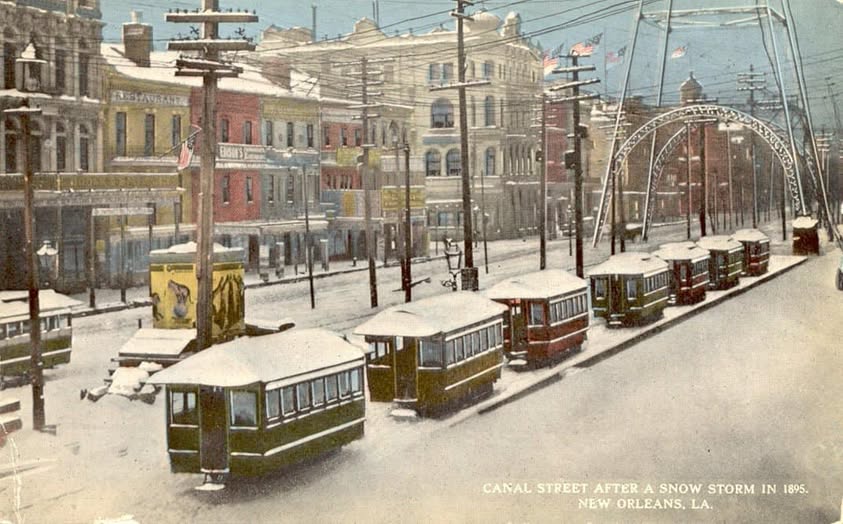
The southern journey also intersected with the extraordinary New Orleans snowfall preserved in the Archive’s photographic research.
Another surviving report follows Schmidt in connection with a steamer bound toward Tampa.
Transportation, weather, money, contracts, performers, and local arrangements could determine whether one of these earliest traveling-midway ventures succeeded or collapsed.
The Archive also preserves follow-up research concerning performers—including the Japanese dancer story—because what happened to the people who traveled with these enterprises is part of the history, not an appendix to it.
The Japanese Dancer and the 1896 Berlin Story
A German-language Chicago newspaper article of November 28, 1896, “Ollie, die schöne Japanerin,” followed a woman known in Chicago amusement circles as “the beautiful Japanese woman” during the Columbian Exposition period and connected her story with Otto R. Schmidt.
The article described Schmidt as the former manager of the People’s Theatre and reported that he was then allegedly imprisoned in Berlin in connection with a later theatrical venture.
Because the article combines reported facts, allegations, personal relationships, and business history, the Archive preserves it as a source account rather than treating every assertion within it as independently verified fact.
What it does establish for our purposes is important: Schmidt’s story did not simply disappear with the troubled southern venture. His later history continued in the theatrical world.
He Remained a Showman
New York Clipper notices preserved by the Archive from September 1 and October 6, 1894; January 12, July 20, and August 10, 1895 document Schmidt in the professional amusement press and include his management of other shows.
Together with the November 1896 Chicago newspaper report, they prevent us from ending his biography falsely with the collapse of one enterprise.
Otto Schmidt remained a showman.
How Did They Make the Magic Move?
That may be the most important question Otto Schmidt’s story leaves us.
He did not inherit a proven system for moving a midway. He helped discover what such a system would have to become.
Chicago had demonstrated that the shows could create wonder. Schmidt’s experiment exposed the next problem: moving the people, animals, scenery, canvas, props, lighting, fronts, and equipment; protecting them in transit; rebuilding everything on an empty lot; presenting the illusion; tearing it all down; and doing it again in the next town.
The road taught lessons that later showmen would refine into better railroad equipment, packing systems, portable construction, advance crews, routing, and organization.
Otto Schmidt helped carry the Midway Plaisance beyond the gates of the 1893 World’s Columbian Exposition.
In doing so, he belongs to the first chapter in the story of how the Midway became American—and how the American midway learned to travel.
He built the first midway from tarpaulins and memory, and the carnival followed.
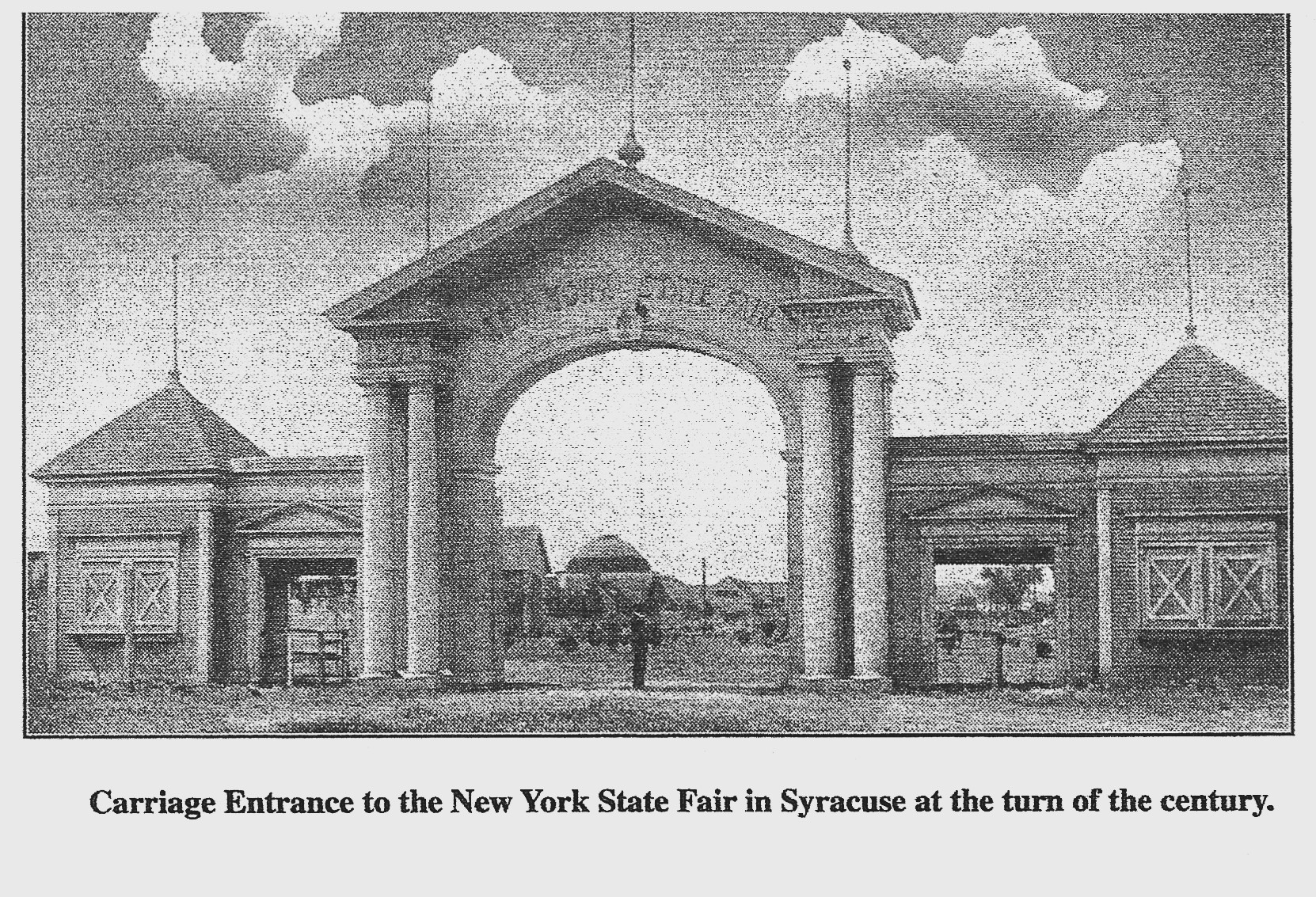
Though his artistic style was still developing, Schmidt painted banners, facades, and scenery to create exotic wonder. By 1896, he was booking state fairs, including Syracuse, and bringing urban spectacle to rural America. His setbacks in New Orleans, which included a contract that was not honored and going broke, highlighted the risks of the trade, but his pioneering role cemented his legacy as the first architect of the traveling midway.
SOURCES & RESOURCES:
- People’s Theatre Chicago material, April 1893
- Miners’ Journal, Pottsville, March 26, 1894
- St. Louis advertisements Sept. 17 and Oct. 8, 1894
- New York Clipper Sept. 1 and Oct. 6, 1894, Jan. 12, July 20 and Aug. 10, 1895
- New Orleans “A Midway Muddle”; Times-Picayune Jan. 22, 1895 acquittal
- New Orleans snowfall material; steamer-to-Tampa report; Chicago Abendblatt Nov. 28, 1896
- Billboard March 21, 1925
- Howard P. Jones, Billboard June 13, 1925 Summer Special
- Joe McKennon, A Pictorial History of the American Carnival
- Billboard Oct. 7, 1911;
- Debbie Rivera’s source transcriptions, clippings, route reconstruction, and comparative research.