Traveling Carnival History, American Circus History, Sideshow History, and more . . .

Old Carnival Photos, Carnival History, Circus History, Traveling Shows

  • HOME
    • The Heart of The American Midway
  • THE AMERICAN MIDWAY SHOWMEN
    • Biographies of the American Midway
      • Biographies
        • Early Pioneers (1893 – 1905)
        • Expansion Era (1905 – 1915)
        • Growth of The Railroad Shows (1915 – 1929)
        • The Golden Age of The American Midway (1930s – 1950s)
        • Television, Highways, and Change of American Midways (1950s -1970s)
  • CARNIVAL COMPANIES
    • Carnival Company Library
  • COLLECTIONS
    • Old Carnival Midway Photos
    • History Of The American Carnival
      • Traveling Carnivals In America Brought Earliest Form of Entertainment
        • Patent Medicine Shows
      • Traveling Show History
        • How The Traveling American Carnival Grew
      • Railroad History Of Carnival and Circusl Trains
  • AMERICAN MIDWAY RESEARCH LIBRARY
    • How To Use The Research Library
  • ABOUT
    • A Brief Bio
      • Doc’s Midway Art
    • CONTACT
You are here: Home / Midway Shows History / EARLY 1900 MIDWAY ATTRACTION

EARLY 1900 MIDWAY ATTRACTION

January 30, 2026 By Editor

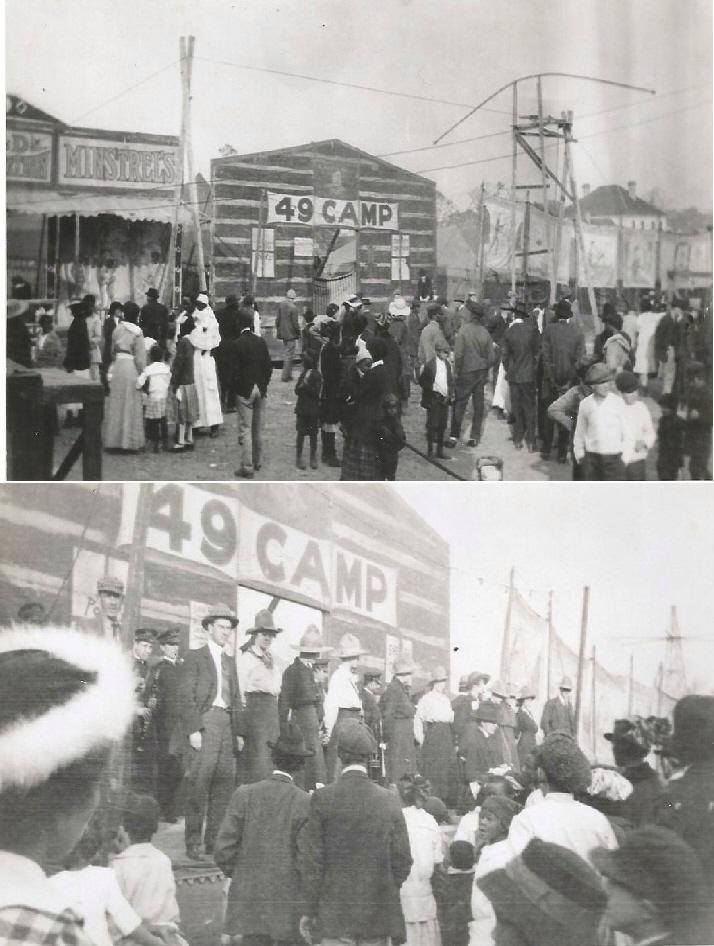
49 Camp On The Carnival Midway
alt=49 Camp On The Carnival Midway

An early 1900’s midway attraction, supposedly originated by a man named Sam Davis, was the notorious 49 Camp. These attractions were modeled after early gold rush mining town saloons in San Francisco’s infamous Barbary Coast. Patrons were offered dances with young ladies at 10 cents a dance plus tips ( and often, accommodations in one of the show Pullman cars ). The ‘camps’ had a piano player at one end of the tent, a whiskey bar at the other, and a dance floor with girls sitting along the sides on stools in the middle. The girls were paid a fixed rate per dance plus tips. A floor manager was paid a percentage of the gross to keep things moving along so on big days, the dances got shorter and shorter.
Foley & Burke had one operating in 1909, as did Rice & Dore, Nat Reiss, and The Mighty Sheesly Show as late as 1914.
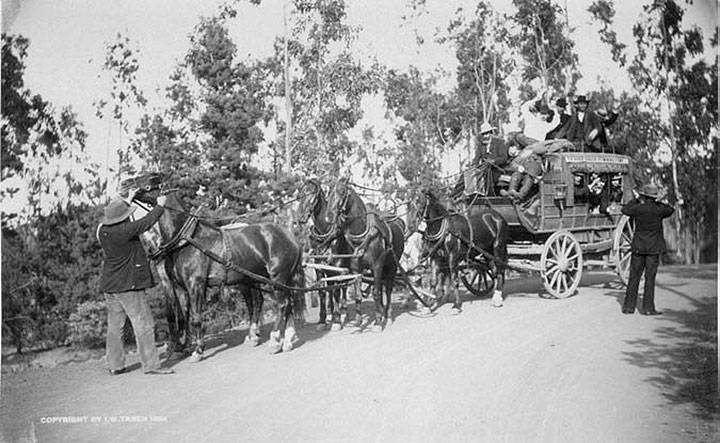
Sam Davis even produced a whole 49 town for the 1894 Mid Winter Exposition in San Francisco. There were stagecoach rides where people were robbed of their loose change by masked riders. Staged lynchings, gun fights, and mineral claim riots were also features. Once, when a fake stabbing took place and several woman fainted, the floor manager, a man named Ruffe Love, shouted “roll the corpse down the stairs and grab your partners for the next dance !”
The 49 camp midway operators focused on the saloon and dance girls because they were the most profitable, and most carnivals already carried a large Wild West show at the time, focusing on other cowboy activities.
The combination of men, free flowing booze, and available women made these places veritable powder kegs. Fights broke out with frequency, and knife and gun fights often led to the local constabulary being hastily called in. Their reputation became so bad that no show with a 49 camp on their midway could book a decent spot, and they eventually just faded away. 
alt=49 Camp On The Carnival Midway
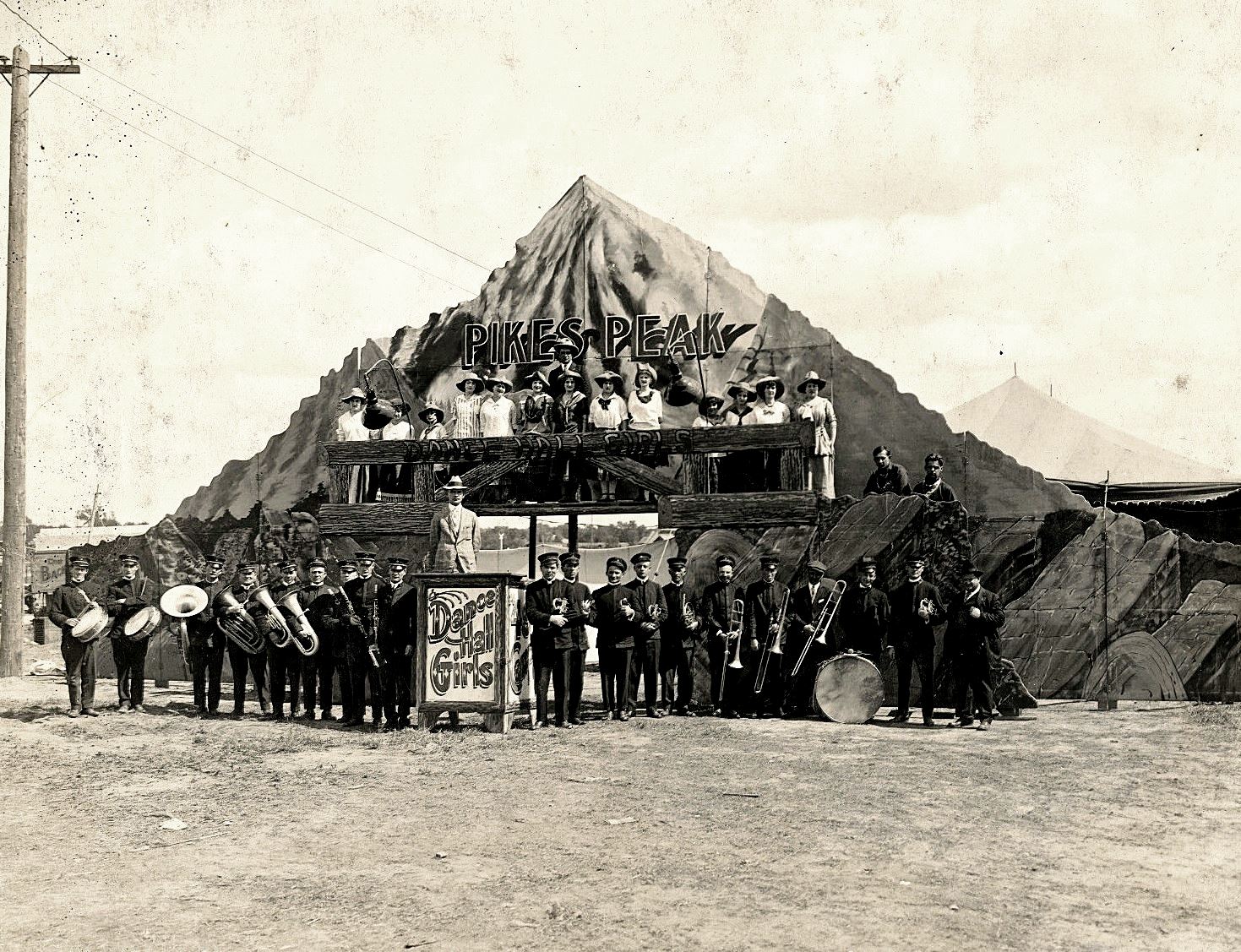
Pike’s Peak

The 1894 California Midwinter Fair 49 Camp was added to many midways in addition to other shows. Visitors to the 49 Camp California Midwinter Fair 40 Camp, included “elite businessmen and journalists, partook of flapjacks, beans, and bad manners here in order to capture the experience of the wild west.”
alt=early midway 49 camp
49 Camp Stage Coach Hold Up at the California Midwinter Fair

The California Midwinter International Exposition of 1894, often associated with the momentum of the 1893 Chicago World’s Fair, was a major World’s Fair held in San Francisco’s Golden Gate Park from January to July 1894. Conceived by M.H. de Young, it aimed to boost California’s economy, featuring the 270-foot Bonet Electrical Tower, diverse agricultural exhibits, and over 2 million visitors. 

Key Details of the 1894 Fair:

  • Purpose & Conception: Following the 1893 Chicago World’s Columbian Exposition, Michael H. de Young, publisher of the San Francisco Chronicle, sought to bring similar international attention to California, which was experiencing an economic depression.
  • Location & Timing: Held in Golden Gate Park (now the Music Concourse area) in San Francisco, it operated officially from January 27 to July 5, 1894.
  • Key Attractions:
    • Electric Tower: A 270-foot, 120,000-lamp “Electric Tower” designed by A. Page Brown dominated the grounds.
    • Main Buildings: Featured Fine Arts (the only building designed to be permanent), Mechanical Arts, Horticulture & Agriculture, and Manufacturers buildings.
    • Highlights: Included a “Cairo Street” exhibit, a “Dante’s Inferno” ride, and unique agricultural sculptures like a knight made of prunes.
  • Impact: Despite being a regional fair without federal funding, it was highly successful, drawing over 2 million attendees and showcasing California’s resources, including a prominent, million-dollar fur exhibit by H. Liebes and Company. 

“The fair successfully brought the “World’s Fair” experience to the West Coast, acting as a significant, albeit smaller, successor to the 1893 Chicago event.” 
Filed Under: Midway Shows History

Midway Slideshow

Books About Gibtown

  • Gibtown, Through The Camera Lens of Diana Phillips Book – Gibtown, Through The Lens of Diana Phillips

Carnival

  • John Dillinger's Car An short story in the site Sideshow World

Carnival and Circus Links

  • Buckles Blog Spot An interesting site full of carnival and circus information and photos from the past to present day.
  • Carousel World worlds leading collectors, and foremost authorities on antique carousels and carousel art.
  • Circus Blog A cool site loaded with historical information about the circus and carnival.
  • Circus Historical Society Circus Historical Society
  • Greater Show World….The Voice Of Show Business 1936 An amazing old magazine full of articles describing the Show Business Midways of 1936.
  • http://dick-dykes.blogspot.com/ A nifty site filled to the brim with cool videos, great stories and pictures.
  • National Carousel Association Index of North American Carousels
  • Sawdust and Spangles This is a great site for circus historians and circus model builders.

Carnival and Circus Museums

  • C. W. Parker Carousel Museum 1901 C.W. Parker Carousel Museum
  • Carnival World Museum American Carnival History Cultural Museum
  • Circus Historical Society Circus Historical Society
  • Circus World Museum Baraboo Wisconsin Circus History Museum
  • Herschell Carrousel Factory Museum Carousel History Museum
  • The Carousel Museum Carousel History Museum
  • The Ringling Circus Museum Ringling Cuircus Museum

Carnival and Circus Research Sources

  • Billboards Online at World Radio History Billboards from 1894 – 1921
  • New York Clipper New York Clipper Trade Paper – Carnival, Circus, Theater, Music
  • Old "Billboard Magazines" From A Bygone Era Old Billboard Magazines Starting From 1942 Featuring Ads And Stories From The Sawdust Trails Of The Times

Carnival Organizationa and Associations

  • Gibtown Bike Week I I S A and Showman’s Shrine Club sponsors Gibtown Bike Week Annually
  • International Independent Showmen's Association International Independent Showmens Associationor IISA, Gibsonton

Carnival, Circus, and Gibsonton Images

  • USF Showmen's Museum Photograph Collection USF Digital Collection of images portraying the life and times of American Carnival and Circus including Gibsonton

Side Show History

  • Carny World A link to some sideshow history and “freaks”
  • Shocked And Amazed Sideshow Seen Through A Modern Lens
  • Side Show World A site for great stories, photos and links to the backend of the midways of America
  • The Human Marvels A collection of historical “freaks” and brief discriptions of their histories

USF Showmen's History

  • Showmen's Oral History Project Andy Huse, assistant librarian in USF Tampa Library Special Collections, interviews association members involved in circuses, rodeos, and carnivals. Home-based in Gibsonton, Florida, the Showmen’s Association interviews document the careers of various sho
  • USF Showmen's Museum Photograph Collection USF Digital Collection of images portraying the life and times of American Carnival and Circus including Gibsonton

Magic Acts

Magicians Hilliar and Houdini

Midway Magic Acts – Houdini and Hilliar Were Great Friends  William J. Hilliar was a magician and author who edited Billboard‘s “Magic and Magicians” page for many years. He was also close friends with Houdini. “That friendship will always stand out as one of the dominating factors in my life,” said Hilliar. In 1933, Hilliar […]

Carnivals

HAROLD A. BUSHEA

Early Carnival Contracting Agent, Manager, and General Director Harold A. Bushea belongs among the important figures of the formative American traveling midway not because his name appeared above the title of a famous carnival, but because he helped make the organization behind one of those early carnivals work. Before entering the carnival business, Bushea was […]

Carnival Movies

Showbiz And The Big Screen

Hollywood And The Midway Movies Come To The Tented World If you’re like me, you love old films that have anything to do with ‘The Biz’. Victor Mature is great in the 1959 classic: The Big Circus which is an example of a little known Hollywood gem. Elvis Presley in Roustabout features colorful scenes from the […]

Copyright © 2026 · Docs Midway Cookhouse · All rights reserved.