The Short-Lived Show That Helped Launch a Generation of Showmen
The American Amusement Company was not one of the great long-running carnival organizations of the early twentieth century. Its importance lies somewhere else: in the young men who came together to create it and in what they would become afterward.
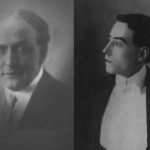
Bill Rice, George F. Dorman, Harry Polack, and young Frank “Harry” Sourbeck had found their way into the emerging world surrounding Frank W. Gaskill. Gaskill’s organization became an extraordinary training ground for men who learned the practical business of putting a midway together and taking entertainment to the public.
The American Amusement Company was one of the first places where some of those men tried to do it for themselves.
From Gaskill’s Midway to a Company of Their Own
The late 1890s were a formative period for the traveling American carnival. Street fairs were flourishing, attractions were being assembled into organized midways, and men who had learned individual pieces of the business were beginning to see the possibilities of combining them into traveling organizations.
Gaskill was one of the men experimenting with that model. His early Canton organization brought together builders, ticket men, performers, agents and young men willing to learn whatever needed to be done.
Among them were Bill Rice, George F. Dorman, Harry Polack and Frank “Harry” Sourbeck.
The experience mattered. Decades later, Rice remembered this period when describing the beginnings of his own company. In his 1925 account for The Billboard, Rice said he organized and booked the Great American Amusement Company by mail in 1900. He remembered it as a remarkably improvised operation, built with bonus money and booked without his traveling with it beyond the opening stand.
Rice jokingly called it a “Sears-Roebuck show.”
It was an apt description of the entrepreneurial spirit behind the enterprise: assemble what was needed, find the engagements, build the show and see whether it worked.
Toledo — The Opening Stand
Rice recalled that the company opened in Toledo, Ohio, where he played for the Odd Fellows and used the bonus money to build the show. Remarkably, he said he never saw the organization again after that opening engagement.
The company lasted only about four weeks.
By the ordinary measure of longevity, it was hardly a success.
By the measure of what came afterward, however, those four weeks look very different.
Rice specifically remembered two of the men associated with the venture:
“George F. Dorman and Harry Polack.”
He added that both became “real showmen.”
They certainly did.
Frank “Harry” Sourbeck — The Showman Who Wasn’t There
One member of this young circle never had the opportunity to see where the experiment would lead.
Frank “Harry” Sourbeck died of typhoid fever on January 22, 1899, at only twenty years old. His obituary remembered an accomplished young man who had graduated from Rayen School with high honors and was held in high esteem by those who knew him.
Harry had already found his way into this remarkable group of aspiring showmen.
His death did not immediately end his connection with their enterprise.
Harry’s father, Frank Sourbeck Sr., stepped forward to represent his son’s interest when the company opened. The surviving Sourbeck research records Frank Sr. at the opening in connection with Harry’s share of the venture.
That gives this otherwise short-lived company one of its most human stories.
The young men were going forward.
Harry could not.
His father stood in his place.
Learning to Build a Midway
The significance of the American Amusement Company becomes clearer when we understand what operating a carnival required around 1900.
Rice’s later recollection describes the enormous amount of infrastructure surrounding these early organizations. Local committees could be responsible for constructing arches, exhibit booths, bandstands, midway fencing and entrances; providing ticket boxes and stages; building framework for scenery, seats, ballyhoo stands and show fronts; wiring and lighting attractions; furnishing bands and locations; handling licenses and advertising; providing water, ticket takers and spielers; and paying for free acts supplied by the company.
This was not simply a collection of tents arriving in town.
It was a temporary entertainment city that had to be assembled, promoted, operated and then taken apart again.
The men coming through Gaskill’s organization were learning that business from the ground up.
Four Weeks — And Then They Kept Going
The American Amusement Company disappeared quickly.
The showmen did not.
Bill Rice continued experimenting, promoting and creating entertainment enterprises throughout an extraordinary career. His ventures would eventually range far beyond the conventional midway, including the spectacular Floating City and Rice & Dore Water Carnival. The surviving 1915 advertisement for that later enterprise shows just how far Rice’s promotional imagination eventually traveled.
George F. Dorman continued through numerous partnerships and carnival organizations and remained in the amusement business for decades.
Harry Polack likewise became an established showman.
And Frank “Harry” Sourbeck, whose opportunity ended almost before it began, now takes his place beside them in the historical record.
More Important Than Its Four-Week Run
The American Amusement Company matters precisely because carnival history cannot be measured only by the organizations that survived.
Shows formed and disappeared. Partnerships changed. Equipment moved from one owner to another. Men learned the business working for someone else, joined together, separated, failed, tried again and carried what they had learned into the next enterprise.
The American Amusement Company is a particularly clear example.
It lasted weeks.
Its people influenced the midway for decades.
And behind those people stood another important connection: Frank W. Gaskill.
When the biographies and company histories are viewed together, Gaskill’s influence becomes increasingly visible. Men who worked in and around his early organization did not simply disappear when they left him. They became owners, promoters, managers and builders of other shows.
The American Amusement Company was one small branch of that much larger tree.
For The American Midway Archives, that is why its story deserves to be preserved.