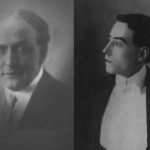
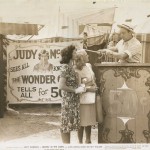
A Young Showman at the Beginning of the American Midway
Frank “Harry” Sourbeck found his way into an extraordinary circle of men who were helping shape what the American traveling midway would become. Frank Gaskill, George Dorman, Bill Rice and Harry Polack would become names threaded throughout early carnival history. Harry did not have the years they had. His life ended before he could build the long career that might have shown us what he would become.
But Harry was there at the beginning.
A Young Man from Ohio
Frank Harry Sourbeck was born December 19, 1878, in Youngstown, Ohio, the son of Frank Sourbeck and Mary Burke Sourbeck. His obituary tells us something unusually personal about the young man behind the showman’s name.
Harry attended Youngstown’s public schools and then entered Rayen School, graduating with the class of 1898 with high honors. He was remembered as a young man of good habits who was highly regarded by those who knew him and as a devoted son and brother.
Those details matter. They allow us to see someone more fully than the name “Sourbeck” appearing among the early carnival men.
Harry was only twenty years old.
Frank “Harry” Sourbeck — Dates
Born: December 19, 1878 — Youngstown, Mahoning County, Ohio
Died: January 22, 1899 — Youngstown, Mahoning County, Ohio
Age: 20
Burial: Oak Hill Cemetery, Youngstown, Ohio
1878–1899
The Sourbeck Connection to Frank Gaskill
Harry also did not enter an entirely unfamiliar world.
His uncle, George W. Sourbeck, was already part of the Alliance, Ohio, business and amusement community and knew Frank W. Gaskill years before the organized traveling carnival emerged. The newspaper material uncovered for the Archives places George W. Sourbeck and Gaskill together in the Alliance Gun Club in 1885. Other advertisements document Sourbeck’s involvement with theatrical amusement in Alliance.
We cannot know precisely how those earlier relationships influenced Harry’s entrance into show business, and we do not need to invent the missing conversation. What the surviving evidence gives us is enough to understand that the Sourbecks and Gaskill were not strangers whose paths suddenly crossed on a midway.
Harry came from a family already connected to the world around Gaskill.
Among the Men Who Would Become Showmen
That makes Harry’s place among the young men surrounding Gaskill particularly interesting.
George F. Dorman would later remember the formative Gaskill period and the men who learned the business there. Bill Rice would become one of the great promoters and entrepreneurs of the midway. George Dorman would spend decades in the amusement business. Harry Polack would become an important showman in his own right.
Harry Sourbeck belonged to that circle.
He was young, but so were many of the men who were learning this new business. They were discovering how attractions were built, booked, transported and promoted; how crowds moved through a midway; how tickets were sold and taken; and, perhaps most importantly, what would make the public stop, look and pay to be entertained.
Later reminiscences show how important this period was in producing men who would carry those lessons into their own enterprises. Bill Rice’s 1925 recollection, for example, looked back on the early amusement companies and specifically remembered George F. Dorman and Harry Polack as men who became “real showmen.”
Harry never received the decades necessary to build a comparable record.
A Life Suddenly Cut Short
In January 1899, Harry became ill with typhoid fever.
The illness lasted only about a week. What apparently had not initially been expected to become fatal did exactly that.
Frank Harry Sourbeck died at his parents’ home on South Walnut Street in Youngstown on Sunday, January 22, 1899. He was twenty years old.
The obituary called him:
“An Exemplary Young Man.”
It remembered a young man held “in the highest esteem by all” and a “most dutiful son and brother.” He left his parents, brothers Sidney and John, and sister Bessie. His funeral was held at Trinity Methodist Episcopal Church, with burial in Oak Hill Cemetery.
For the Sourbeck family, it was the loss of a son and brother.
For the history of the midway, it was also the loss of a young man just as the business around him was beginning to change dramatically.
His Father Stepped Onto the Midway
Harry’s story, however, did not simply disappear with his death.
The young men with whom he had become associated were moving toward another venture—the American Amusement Company. Harry had an interest in what they were building, and after his death, his father, Frank Sourbeck Sr., carried his son’s place forward.
When the company opened, Frank Sr. went onto the midway representing his deceased son’s interest. The surviving research records his presence at the opening in connection with Harry’s share of the enterprise.
And preserved in the Archives research is the especially poignant detail that Frank Sr. took that first ticket on the midway after his son died.
It is difficult to imagine that moment without thinking of the young man who should have been there himself.
Harry’s companions were beginning lives that would take them across the country and through decades of American amusement history.
Harry’s father stood in his place.
The Showman Harry Might Have Become
We cannot know what Frank Harry Sourbeck would have accomplished had he lived.
We should not try to manufacture the missing years for him.
But neither should the absence of those years cause us to overlook what Harry had already accomplished.
At twenty, he had found his way into an extraordinary group of ambitious young men at precisely the moment when the American traveling carnival was beginning to take recognizable form. The men around him would build shows, form partnerships, take risks, fail, begin again and eventually become part of the history of the American midway.
Harry had found his place among them.
Whatever qualities brought him into that circle—ambition, ability, curiosity, nerve, connections, or some combination of them—his opportunity ended almost before it began.
His father made certain that his son’s place was not immediately forgotten.
And more than a century later, The American Midway Archives returns Frank “Harry” Sourbeck to the company of the showmen with whom his story began.
His career was brief.
His place in history was earned.
Related Showmen: Frank W. Gaskill, George F. Dorman, Bill Rice, Harry Polack, and Frank Sourbeck Sr., American Amusement Company
Vital Records
Sources & Resources
The Youngstown Daily Vindicator, January 23, 1899 — “Frank Sourbeck, Jr.: An Exemplary Young Man Passes Away at His Home.” Obituary documenting Frank Harry Sourbeck’s birth in Youngstown on December 19, 1878; his education and graduation from Rayen School; his character and family; his death following typhoid fever on January 22, 1899; funeral at Trinity M.E. Church; and burial in Oak Hill Cemetery. The obituary was preserved and shared by Dale Alan Sourbeck.
New York Clipper, July 1, 1899, p. 3 — Contemporary account of the Gaskill midway and its personnel, documenting the early organization in which the Sourbeck family became connected with the developing carnival enterprise.
The Billboard, March 21, 1925, Spring Special — Historical retrospectives on the formative years of the organized American carnival, including Bill Rice’s recollections of the early amusement-company ventures and the young showmen who emerged from that period. Rice specifically remembered the Great American Amusement Company and George F. Dorman and Harry Polack as men who later became “real showmen.”
American Midway Archives research collection — Frank “Harry” Sourbeck — Genealogical records and family research used to establish Harry’s parents, Frank Sourbeck and Mary Burke Sourbeck, and to corroborate his birth and death information.
American Midway Archives research collection — American Amusement Company — Contemporary and retrospective material documenting the early company and the connections among Frank “Harry” Sourbeck, Frank Sourbeck Sr., Bill Rice, George F. Dorman and Harry Polack.